March 2026

Dear International Students,

Congratulations on surviving the onslaught of blizzards and storms! It’s been a rough couple of months for the west to east campus trekkers, but fingers crossed for a sunny spring as we move into March.

In Announcements, color breaks through the gray with Holi celebrations, outdoor guided trips offer a moment to exhale, BU’s Indie Art Market spotlights small creative businesses, and BU’s Sabor Latino announces their dance performance for the spring semester.

In Student Experiences, Alicia Chiang (COM ’27) reflects on growing up in Taiwan, adjusting to American culture, and carving out a sense of community that feels both familiar and new.

In Culture Corner, we explore the idea of assimilation and belonging. What do we lose and what do we gain when we start to adapt to a foreign culture?

Announcements

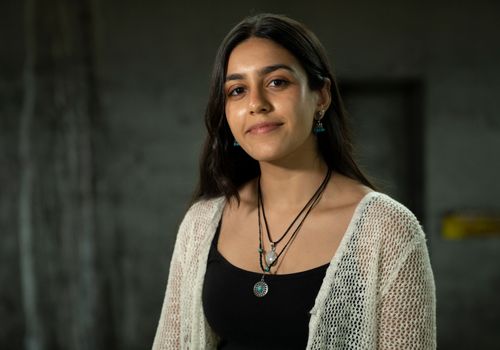
Alicia Chiang Headshot

Student Experiences

A Word from Students: Alicia Chiang (COM ’27), shares her insights on life as an international student at BU.

Read the Full Story

ISSO Insights

Spring is almost here… and that means it’s tax season!

While your ISSO Advisor isn’t a tax expert, we’re happy to provide a helpful resource to make the process easier while you’re in the U.S. If you’re considered a nonresident for tax purposes, Sprintax can guide you step-by-step through your federal tax return and even check whether you’re eligible for a federal refund. Last year, more than 200,000 international students and scholars used Sprintax, and eligible students received an average federal refund of over $927.

If you earned income in 2025 and would like Sprintax to prepare your state tax return as well, there is an additional fee of about $50 per state nonresident return. If Sprintax determines that you are a resident for tax purposes based on your time in the U.S., the system will direct you to other filing options that you may choose to use at your own expense.

Be sure to check your BU email for more details and visit tax information on our website to read more about your filing requirements as well as resources and workshops available to help you file nonresident tax forms and understand your U.S. tax withholdings. Feel free to reach out to your advisor if you have any questions—we’re here to help!

Culture Corner

To Conform or Adapt?

By Ahaan Vaknalli, International Student Assistant 2026

You might forget the first time your name was mispronounced, but you’ll remember the first time you let it stay that way. A split-second decision that lasts a lifetime. Our names are cultural appendages that branch from sprawling roots within our culture and family. Being protective over your roots is fair, after all, it’s only everything you’ve ever known. But conforming is when we dilute parts of ourselves so they seem convenient and compatible for someone else’s understanding. On the surface, it doesn’t sound bad. It’s an unavoidable part of living in another culture. But where we draw the line around what parts of ourselves we keep firm and what parts we allow to be fluid is one of the most important stages of assimilating into a new culture.

Culture and community is all about the shared stories we tell about who we are as individuals and together. It’s the sense that we are larger than we actually are– whether through religions, ethnicity, or even our work. So, if ‘community’ is all about belonging, it’s no secret as to why it can be difficult. Belonging, being liked or accepted, is a sensitive subject for most.

Well, our desire to be part of a community is in our DNA. But when we desperately want to belong at whatever cost, we start trimming away at our sides and edges. The edges we trim to fit in are often the edges that make us unique: the cadence of our voices, the subtle gestures and movements, the way we narrate stories. And sometimes, we lose track of when to stop. Cultural assimilation doesn’t ask for sacrifice, but conformity does. And oftentimes, we mistake the two. We might continue to conform just because of how we think we’ll be perceived in our new skin.

Assimilation is about welcoming people into your world just as you are being welcomed into theirs. It’s a culmination of mutual respect and appreciation, even through irreconcilable differences. Healthily assimilating into a new culture involves setting boundaries between the parts of you you’re willing to adapt and the ones you’d like to keep the same. It can be as specific as your name or your accent, and as broad as your cultural values and morals.

There’s no objective answer to what we lose when we conform, but there’s an answer you can find by reflecting on the way you’ve assimilated/you’re assimilating to life in America and at BU. Take stock of what parts of you you’ve kept close and what you’ve trimmed away, and ask yourself if in the pursuit of wanting to belong, you’ve stayed true and honest to the person you are and would like to be.

Resources


Recent Newsletters