News
Defense Policy; McMahon on Higher Ed; Global Security
BU IN DC
President Melissa Gilliam met with Senator Todd Young (R-IN) and Congressman Seth Moulton (D-MA) on Capitol Hill on September 9th. They discussed the partnership between universities and the federal government, the future of the life sciences, and the University's Living Our Values Initiative.
Provost Gloria Waters attended the Association of American Universities Chief Academic Officers meeting from September 7th to September 9th.
Leslie Dietiker of Wheelock College of Education & Human Development discussed Department of Education-funded research with policymakers, including Representative Susan Bonamici (D-OR), with the LEARN Coalition on September 9th and 10th.
HOUSE APPROVES DEFENSE POLICY BILL
The U.S. House of Representatives passed its annual National Defense Authorization Act (NDAA), a defense policy bill, on Wednesday. The House-passed bill would prohibit federal funding from going to universities that partner with "foreign entities of concern," even for fundamental research, and would require researchers to disclose more information about their interactions with foreign entities. The bill also directs the Department of Defense to continue prioritizing biotechnology research and workforce development, citing the importance of point-of-need synthetic blood and biomanufacturing in supporting warfighters on the battlefield. The U.S. Senate is currently considering its version of the NDAA, which will need to be reconciled with the House version before a final defense policy bill is sent to the President.
BUZZ BITS...
- Last week, Republicans on the House Select Committee on the Strategic Competition Between the United States and the Chinese Communist Party released a report about research security risks. The report asserts that China "exploits U.S. universities – and gains access to U.S. government-funded research – to fuel its military and technological risk." It calls for the end of federal funding to entities that collaborate with "foreign adversaries," even for fundamental research.
- Secretary of Education Linda McMahon called higher education "broken" during a speech on Monday, saying schools have too many administrators and not enough "true leaders." McMahon urged colleges to "prioritize personal growth, seek and serve the truth, preserve and defend civilization, [and] model intellectual leadership and produce future thinkers and leaders."
- During a Senate hearing on the Trump Administration's Artificial Intelligence Action Plan on Wednesday, White House Office of Science and Technology Policy Director Michael Kratsios stated that the Administration will soon seek public input on "regulations that may be hindering the progress of AI." Committee Chairman Ted Cruz (R-TX) discussed his SANDBOX Act, which would create a regulatory "sandbox" for AI developers to test new technologies with fewer federal rules. Senators Tammy Baldwin (D-WI) and Ed Markey (D-MA) raised environmental and energy concerns around AI data centers.
EVENT NEWS YOU CAN USE
The Office of Research will host a Research on Tap focused on "Global Security in an Interconnected World" on Tuesday, September 16th, at 4 p.m. in the Kilachand Center. Professors Sanne Verschuren, Muhammad Zaman, and Rosella Cappella Zielinski will co-host a curated set of microtalks from BU scholars who are exploring new questions about the nature of security today. For example, how do climate change, migration, and global health intersect with traditional security concerns? What can we learn by examining these issues across disciplines or through new forms of collaboration? RSVP today and find your next research collaborator while enjoying refreshments.
BU President Gilliam Visits Capitol Hill
President Melissa Gilliam met with Senator Todd Young (R-IN) and Representative Seth Moulton (D-MA) on Tuesday, September 9, 2025.
Boston University, Boston Medical Center Researchers Work with High School Students to Build Peer-Led Overdose Prevention Program
Building a curriculum for teens, by teens: students from a Roxbury school met with researchers all summer to learn about opioid overdose prevention.
NIH Budget; Grantmaking Executive Order; ED Under Secretary
BU IN DC
Kevin Outterson of CARB-X and the School of Law met with Office of Management and Budget officials to discuss antimicrobial resistance on August 21st.
HOUSE SIGNALS SUPPORT FOR NIH, PELL GRANTS, AND DOE SCIENCE
On Tuesday, a subcommittee of the House Appropriations Committee advanced a bill on party lines that would provide $46.9 billion for the National Institutes of Health (NIH) in fiscal year 2026, a slight increase over its current funding level. The figure is similar to the $48.7 billion recommended last month by the Senate Appropriations Committee, meaning key committees in both chambers have rejected the Trump Administration's proposal to cut the agency by 40%. The bill would also preserve the maximum Pell Grant award of $7,395, while cutting the budget for Federal Work-Study programs and the Institute of Education Sciences.
On Thursday, the U.S. House of Representatives passed a bill that would increase the Department of Energy Office of Science budget in fiscal year 2026 by 2% over its current funding level, but cut ARPA-E. Congress is unlikely to negotiate final spending bills before the October 1st start of the fiscal year, so a continuing resolution will be necessary to keep the government operational.
WHITE HOUSE ISSUES DIRECTIVES ON GRANTS, ADMISSIONS
On August 7th, President Donald J. Trump issued a presidential memorandum on "Ensuring Transparency in Higher Education Admissions" and an executive order on "Improving Oversight of Federal Grantmaking."
- The admissions memo directs the Secretary of Education to require colleges report more data about their admitted students in order to assess whether schools are inappropriately considering race in admissions decisions. In response, the Department of Education is inviting public feedback on a proposed Admissions and Consumer Transparency Supplement for selective colleges and universities.
- The grantmaking order calls for political appointees to review funding opportunities and grant awards for alignment with the Administration’s priorities, for agencies to expand the pool of award recipients, for the federal government to change how it reimburses grantees for research, and for the Office of Management and Budget to update grant regulations to expand the federal government’s ability to terminate grant awards. Federal agencies have until next week to determine how they will implement the order.
BUZZ BITS...
- On August 4th, Nicholas Kent was sworn in as Under Secretary of the U.S. Department of Education, overseeing policies impacting higher education and federal student aid. Kent previously served as the Commonwealth of Virginia's Deputy Secretary of Education and held a leadership position in a trade association representing for-profit colleges.
- In August, federal agencies released their plans for implementing the Trump Administration's “Restoring Gold Standard Science” executive order. Plans from the National Institutes of Health, National Science Foundation, Department of Energy, and NASA outline how these agencies promote transparency in grant awards. They also indicate that future funding notices will incorporate the principles of gold standard science and encourage researchers to share negative results.
- Last week, the U.S. Department of Homeland Security proposed a new rule to establish a fixed admission period for international students and scholars. The rule would replace the long-standing "duration of status" policy, which allows visa holders to remain in the U.S. for the full length of their academic or exchange program without needing to request an extension. The proposal is open for public comment through September 29, 2025.
Boston University Appoints Kenneth Lutchen to Top Research Job
Renowned biomedical engineer, influential researcher, and transformative higher education leader is new vice president and associate provost for research.
A Conversation with BU’s New School of Public Health Dean, Determined to Have “a Real Impact on Real People”
Adnan Hyder shares his vision for bringing positive change to society and keeping empathy at the core.
Photo Essay: Terriers on Their Summer Internships, Jobs
Students talk about the hands-on learning and experience they gained.
First-Gen Students, PFAS, Social Security
STUDENT LIFE

Newbury Center Supports First-Generation Students of All Levels
Inside Higher Ed highlights BU's support and resources for first-gen undergraduate students, as well as graduate students and postdoctoral associates who are the first in their families to pursue higher education.
Learn how BU is leading the way
RESEARCH HIGHLIGHT

What Are PFAS? And Could Fiber Supplements Help Remove Them from Our Bodies?
BU study suggests a common dietary supplement could decrease levels of the forever chemicals.
FACULTY EXPERT
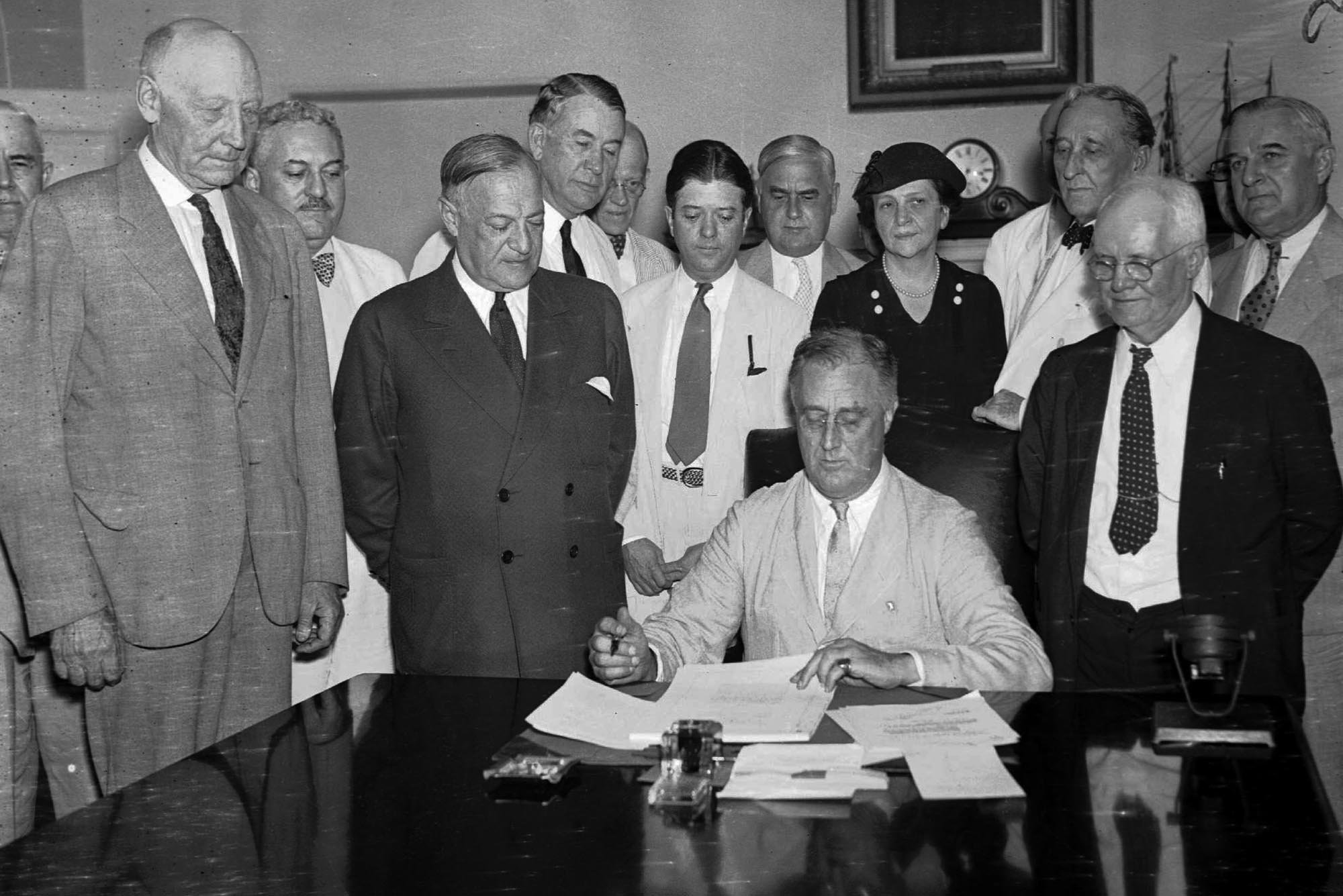
As It Turns 90, Social Security Is Showing Its Age. Boston University Economist Has a Fix
Laurence Kotlikoff discusses how to avoid insolvency and keep the “essential” program afloat.
THOUGHT LEADERS
In Case You Missed It...
Global health scholar Adnan Hyder is the new dean of the BU School of Public Health... mechanical and biomedical engineer Elise Morgan was named dean of the BU College of Engineering... Senator Amy Klobuchar (D-MN) cited research by Professor Michelle Amazeen of the BU College of Communication in her New York Times opinion piece on the need to regulate deepfakes... BU Questrom School of Business Professor Jay Zagorsky explains how artificial intelligence is changing the game with plane ticket pricing on PBS NewsHour...The Today Show interviewed BU Chobanian & Avedisian School of Medicine Professor Christine Crawford about how to get children to put down devices and make real-world connections... BU political scientist Maxwell Palmer published an op-ed in Time about the dangers of gerrymandering and how to fix it.