News
“This Is My Stepping-stone.” 553 BU First-Generation Students Welcomed into Honor Society
BU Newbury Center ceremony celebrates inaugural members, their determination, contributions blazing new trails.
BUzz Bits
BU IN DC
Peter Fox-Penner of the Institute for Sustainable Energy co-hosted a virtual Capitol Hill briefing on clean energy and climate infrastructure on April 14th.
Dean Sandro Galea and Catherine Ettman of the School of Public Health discussed pandemic preparedness with staff from the Senate Health, Education, Labor and Pensions Committee on April 14th and 16th.
Dean Harvey Young was inducted into the College of Fellows of the American Theatre on April 18th.
BUZZ BITS...
- On Thursday, President Joe Biden announced his choices to lead the Department of Energy (DOE) Office of Science and the National Oceanic and Atmospheric Administration (NOAA). He intends to nominate Dr. Asmeret Berhe, a soil scientist at the University of California - Merced, as director of the DOE Office of Science and former NOAA Chief Scientist Dr. Rick Spinrad as administrator of NOAA.
- Last week, the National Institutes of Health announced that proposed human fetal tissue research would no longer need to be reviewed by an ethics advisory board, reversing a Trump Administration policy. Proposers will still need to justify the use of human fetal tissue in their submission.
- The Senate Health, Education, Labor, and Pensions Committee held a hearing on preventing undue foreign influence in biomedical research on Thursday. NIH Deputy Director Mike Lauer told lawmakers that international collaborations were critical to successfully addressing the pandemic, while also emphasizing that the NIH is vigilant against inappropriate activities by foreign governments. He testified that the NIH has contacted more than 90 awardee institutions with concerns about approximately 200 scientists.
EVENT NEWS YOU CAN USE
Did you miss "Mapping Your Research Path: An Early Career Workshop" offered by the Office of Research earlier this semester? The recording is now available for you to watch. Federal Relations and Foundation Relations introduced the wide range of BU resources available to junior faculty embarking on their research career. Participants learned about the tools needed to be successful at identifying and securing external funding for research.
GRANTS NEWS YOU CAN USE
The National Science Foundation (NSF) recently announced the Racial Equity in STEM Education Program. Through this program, NSF will support bold and transformative fundamental and applied research on racial inequality and systemic racism in the science, technology, engineering, and mathematics (STEM) fields. Proposals must be led by or developed with communities that are impacted by systemic racism and their experiences must be central to the proposal for it to be competitive. The first application deadline for this program is July 13, 2021. It is recommended applicants submit a one-page concept paper ahead of submitting a proposal.
Clean Energy & Climate Innovation: New Opportunities for Infrastructure Investment
BU IN DC
Clean Energy & Climate Innovation: New Opportunities for Infrastructure Investment
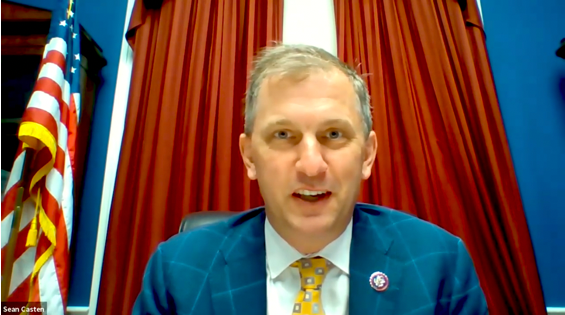
The BU Institute for Sustainable Energy and the Information Technology & Innovation Foundation recently hosted a webinar on how Congress can successfully incentivize cutting-edge clean energy investments in a future infrastructure package, featuring Sen. Edward Markey (D-MA) and Rep. Sean Casten (D-IL). Watch the briefing

RESEARCH HIGHLIGHT
Why Has Gun Violence Increased in the United States?
BU School of Public Health researcher Jonathan Jay says the pandemic's health and economic stresses played a large role in 2020's record increase in gun deaths, and warns the trend may continue without community and government help.
Find out why

FACULTY EXPERT
A Trivia Master Mind
BU School of Medicine Professor LaKedra Pam is a two-time Jeopardy! champion who has turned her passion for trivia into a second career on the Game Show Network's Master Minds. Get the answer
THOUGHT LEADERS
In Case You Missed It...
Julia Raifman of the BU School of Public Health created a COVID US State Policies Database to document health, economic, and social policies implemented during the pandemic... BU economist Raymond Fisman argues that most wealthy individuals' charitable impulses are driven by efficiency, not equality, in The Atlantic... The BU Global Development Policy Center finds that International Monetary Fund-mandated austerity measures lead to greater inequality in Politico... Katharine Lusk of the BU Initiative on Cities explains that pandemic burnout is leading many U.S. mayors to step-down in The New York Times.
Biden Unveils Research Priorities
BU IN DC
The School of Public Health and the Center for Antiracist Research cohosted "Antiracism as Health Policy: Race, COVID-19, and Policy Reform," a webinar series featuring Senator Elizabeth Warren (D-MA) and Representative Ayanna Pressley (D-MA), from April 5th through 7th.
Senior Vice President Steve Burgay, Amy Hook, and Rachal Lapal of External Affairs attended the Association of American Universities Public Affairs Network meeting on March 30th and 31st. Carol Duan of BU Public Relations spoke to the meeting attendees about communicating with Chinese students.
Kevin Gallagher of the Global Development Policy Center discussed Chinese loans to African nations during a panel hosted by John Hopkins School of Advanced International Studies on March 30th.
James Bessen of the School of Law spoke about the future of work as part of a virtual discussion hosted by the GRAIL Network, the Center for Democracy & Technology, and the R Street Institute on March 18th.
BIDEN UNVEILS RESEARCH PRIORITIES
President Joseph Biden recently unveiled both a stimulus package and a budget proposal that envision significant roles for federally-funded research. The President's American Jobs Plan, a $2.25 trillion infrastructure proposal to jumpstart his "Build Back Better" agenda, proposes $50 billion for the National Science Foundation to establish a new technology directorate and $40 billion for lab infrastructure and significant investments in research capacity at Minority Serving Institutions. Congressional Democrats intend to vote on the plan this summer, but it may face challenges in the closely divided U.S. Senate.
Biden's "skinny" budget proposal, a high-level overview of the President's fiscal year 2022 funding recommendations, requests:
- Pell Grants: $3 billion for Pell Grant awards for low-income students, which would increase the maximum grant award by $400 and expand eligibility to Deferred Action for Childhood Arrivals (DACA) recipients.
- National Institutes of Health: $51 billion, including $6.5 billion to create a new ARPA-H, designed to accelerate medical research from discovery to implementation.
- National Science Foundation (NSF): $10.2 billion, a $1.7 billion increase over its current level.
- Department of Energy (DOE) Office of Science: $7.4 billion, a $400 million increase over its current level.
- Climate research: $4 billion in climate research and development across NSF, NASA, DOE, the Environmental Protection Agency, and the National Oceanic and Atmospheric Administration.
Using the preliminary budget request as a guide, Congress will now begin crafting the annual spending bills that determine agency budgets.
MOMENTUM BUILDS FOR A BIGGER NSF
Both chambers of Congress have begun consideration of legislation which would increase the budget of the National Science Foundation (NSF) and create a new NSF directorate focused on addressing grand challenges and commercializing research. On Wednesday, the Senate Commerce, Science and Transportation committee held a hearing on the Endless Frontier Act, a forthcoming bill sponsored by Senate Majority Leader Chuck Schumer (D-NY) and Senator Todd Young (R-IN) that would provide $100 billion to NSF over five years and expedite commercialization of critical technologies such as artificial intelligence, cybersecurity, and synthetic biology. Majority Leader Schumer plans to schedule a Senate vote on the Endless Frontier Act by the end of April. Separately, the leaders of the House Science, Space, and Technology Committee introduced the bipartisan NSF for the Future Act (H.R. 2225), which would authorize a $73 billion increase to NSF’s budget over five years. It would also create new mentoring requirements for those working with NSF-funded trainees and provide greater support for Minority Serving Institutions.
EDUCATION DEPARTMENT REVIEWING TITLE IX RULES
The U.S. Department of Education's Office of Civil Rights (OCR) announced on April 6th that it will review the agency's Title IX regulations on campus sexual misconduct, as directed by President Biden in a March executive order on gender equity. The announcement is the first step in rolling back changes made during the Trump Administration that narrowed the federal definition of sexual misconduct and required campuses to hold live hearings as part of the adjudication process. Advocates for sexual assault survivors opposed the Trump-era changes, which they believe have a chilling effect on the reporting of campus assault allegations. OCR plans to solicit public input on the regulations in the coming months, with the expectation that a formal rule-making process will follow.
BU Hosts Clean Energy & Climate Infrastructure Briefing
Clean Energy & Climate Innovation:
New Opportunities for Infrastructure Investment

On Wednesday, April 14, 2021, experts from the Boston University Institute for Sustainable Energy (ISE), the Information Technology & Innovation Foundation (ITIF), and Breakthrough Energy held a virtual discussion on how Congress can successfully incentivize cutting-edge clean energy investments in a future infrastructure package. The webinar audience learned what lawmakers should do to catalyze robust clean economic growth and job creation while improving the quality of our infrastructure and reducing the catastrophic effects of climate change.
OPENING REMARKS FROM:
Senator Ed Markey (D-MA)
Congressman Sean Casten (D-IL)
SPEAKERS INCLUDED:
Trisha Miller, Senior Director, Breakthrough Energy
David Hart, Senior Fellow, Information Technology & Innovation Foundation
Peter Fox-Penner, Director, Boston University Institute for Sustainable Energy
PRESENTATIONS & RESOURCES:
Trisha Miller, Breakthrough Energy
David M. Hart, Information Technology and Innovation Foundation (ITIF)
Peter Fox-Penner, BU Institute for Sustainable Energy (ISE)
WEBINAR VIDEO:
Asian Americans and the Model Minority Dilemma
RESEARCH HIGHLIGHT
Asian Americans and the Model Minority Dilemma
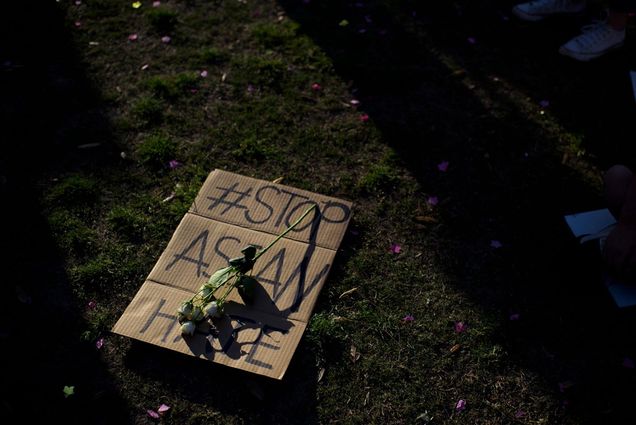
In light of recent attacks, BU Professor Hyeouk Chris Hahm -- founder of the Asian Women’s Action for Resilience and Empowerment (AWARE) lab -- discusses Asian Americans' experiences with racism, alienation, and anxiety. Read her insights

ADVOCACY RESOURCE
It's Time to #DoublePell
BU joined nearly 1,200 colleges and organizations to urge Congress to dramatically expand college access by doubling the maximum Pell grant award. See why

FACULTY EXPERTS
A Solution-Oriented Approach to Environmental Equity
BU environmental health scholars Jon Levy and Pat Kinney discuss the link between the environment, ethics, and human health while outlining ways to live more sustainably. Find a solution
THOUGHT LEADERS
In Case You Missed It...
BU’s Fraunhofer USA Center for Manufacturing Innovation donated 1,000 masks to the Pine Street Inn for use by people experiencing homelessness... Breakthrough Energy highlighted BU's wind farm project in South Dakota as a model case study for reducing the planet’s carbon emissions... Joshua Goodman of the BU Wheelock College of Education & Human Development spoke to WBUR about a recent unexpected boost in the diversity of Massachusetts teachers... Saida Grundy of the BU College of Arts & Sciences calls for a better understanding of the intersection of gender violence and hate crimes in The Atlantic... Michael Siegel of the BU School of Public Health explains the variety of gun cultures in the United States in USA Today.
BUzz Bits
BU IN DC
Malika Jeffries-EL of the College of Arts & Sciences participated in a media briefing on cutting-edge semiconductor research hosted by the National Science Foundation on March 19th.
Mayank Varia of the College of Arts & Sciences spoke on a New America Foundation panel on innovations in privacy-preserving technologies on March 24th.
Wheelock College of Education & Human Development Dean David Chard discussed the Institute for Education Sciences with Congressional committee staff as part of the LEARN Deans spring advocacy day on March 24th.
BUZZ BITS...
- President Joseph R. Biden announced his intent to nominate former U.S. Senator Bill Nelson as administrator of the National Aeronautics and Space Administration (NASA). Nelson is a former astronaut who represented Florida in the Senate for 14 years.
- The White House Office of Science and Technology Policy (OSTP) announced last week that Dr. Jane Lubchenco will serve as deputy director of climate & environment. Lubchenco is a marine biologist who served as the administrator of the National Oceanic and Atmospheric Administration during the Obama administration.
- Stefanie Tompkins became the new director of the Defense Advanced Research Projects Agency (DARPA) last week. Tompkins is a former U.S. Army intelligence officer who previously worked at DARPA for more than a decade, including a stint as the agency's acting director in 2017.
- Former Boston Mayor Marty Walsh was confirmed as Secretary of Labor (DOL) by a 68 to 29 vote of the U.S. Senate on Monday. Walsh is the first former union president to lead the agency since 1977.
GRANTS NEWS YOU CAN USE
The National Science Foundation (NSF) has released the 2021 Convergence Accelerator solicitation for projects that seek “to transition basic research and discovery into practice—to solve high-impact societal challenges aligned with specific research themes (tracks).” NSF is inviting proposals for two new tracks: Networked Blue Economy and Trust and Authenticity in Communications Systems. Letters of Intent for Phase I proposals are required and due by May 5th, and full proposals due by June 14th. Only Phase I awardees are eligible to submit to Phase II, with those proposals due by May 25, 2022.
EVENTS NEWS YOU CAN USE
The Office of Research and Foundation Relations are cohosting a workshop on April 7th to acquaint social scientists at BU with the Russell Sage Foundation's (RSF) mission, funding priorities, and grant application protocols. RSF dedicates itself to strengthening the methods, data, and theoretical core of the social sciences to better understand societal problems and develop informed responses. Program Officer Stephen Glauser will give a presentation and take questions from the audience.
A Note To Our Readers: With Congress starting a two week District Work Period, Beltway BUzz will be on hiatus. Follow us on Twitter or check out our website for updates, and see you in April!
Antiracism As Health Policy: Race, COVID-19, and Policy Reform

YOU'RE INVITED
Antiracism As Health Policy: Race, COVID-19, and Policy Reform
Join Congresswoman Ayanna Pressley (D-MA), Senator Elizabeth Warren (D-MA), the BU School of Public Health, and the BU Center for Antiracist Research for a three-part series in April examining racial disparities in health and how they can be addressed through policy. RSVP today

ON THE CHARLES RIVER
University Distributes $11.5 Billion in Federal Pandemic Aid to Students
BU has distributed half of its allocation from the federal Higher Education Emergency Relief Fund to students in need, with the rest to be used to pay down the pandemic-related costs of operating campus. Here's how we did it

ADVOCACY RESOURCE
Investing in the Commonwealth's Future
Boston University, Harvard University, and MIT ask the Massachusetts Congressional delegation to invest in federal student aid, research, and the humanities in fiscal year 2022. Make an investment
THOUGHT LEADERS
In Case You Missed It...
Joshua Pei, Jessica Zheng, and Takeo Rivera of the BU College of Arts & Sciences have a conversation about the increase in anti-Asian racism... More than 100 BU medical and dental students received training to be volunteer COVID vaccinators... Douglas DeNatale of BU Metropolitan College explains how arts organizations struggle during the pandemic in The Boston Globe... Linda Sprague Martinez of the BU School of Social Work describes the community impact of the high COVID death rate among young Latinos in The Washington Post... Michael Meurer of the BU School of Law discusses how the U.S. patent system could encourage greater innovation in The Conversation... Jeffrey Baumgardner and Sarah Luettgen of the BU Center for Space Physics talk about their research into the Moon's comet-like tail in The New York Times.
BU Urges Support for Students, Research
BU IN DC
Douglas Densmore of the College of Engineering was a featured speaker in the National Science Foundation's Bioeconomy Distinguished Lecture Series on March 18th.
Timothy Longman and Eric Schmidt of the African Studies Center met with Massachusetts Congressional offices to discuss the importance of international education programs funded by the U.S. Department of Education on March 18th.
David Jones of the School of Public Health spoke at a National Academies of Sciences, Engineering, and Medicine workshop on U.S. health care expenditures and population health on March 16th.
BU URGES SUPPORT FOR STUDENTS, RESEARCH
In a memorandum sent to each Massachusetts Congressional office this week, Boston University, Harvard University, and the Massachusetts Institute of Technology jointly asked Congress to increase federal investments in student aid and research. The universities requested support for doubling the maximum Pell Grant award for low-income students, robust funding for research agencies such as the National Institutes of Health and the National Science Foundation, and investing in cultural agencies such as the National Endowment for the Humanities. The memorandum, which the universities send annually, comes as Congress begins consideration of the fiscal year 2022 spending bills that determine federal agency budgets.
BUZZ BITS...
- During a debate on the renewal of the Violence Against Women Act (VAWA) on Wednesday, the U.S. House of Representatives voted to authorize the U.S. Department of Education to create a mandatory campus climate survey on sexual misconduct that universities would need to administer every two years. While there is no companion legislation in the U.S. Senate, President Joseph Biden has urged legislators to quickly send him a VAWA bill.
- The National Institutes of Health (NIH) announced yesterday that Dr. Christopher Austin would be stepping down as the founding director of the NIH National Center for Advancing Translational Sciences (NCATS) on April 15th. Dr. Austin will become CEO of Flagship Pioneering, a Massachusetts life sciences company. NCATS Deputy Director Joni Rutter will serve as acting NCATS director while a national search for a replacement is underway.
- On Thursday, the U.S. House of Representatives passed the American Dream and Promise Act (H.R. 6), a bill which would provide a path to citizenship for undocumented individuals who were brought into the country as children. Every House Democrat and nine Republicans voted for the bill, but it is unclear whether the closely-divided U.S. Senate could pass the measure.
EVENTS NEWS YOU CAN USE
The BU Office of Research is hosting Dr. Matthew Fenton of the National Institute of Allergy and Infectious Diseases (NIAID) to provide an update on the Institute's current and future research priorities in light of the COVID-19 pandemic. The virtual seminar on Wednesday, March 31st at 3:30 p.m. will cover topics such as the current budget for the National Institutes of Health, COVID-related grant policies and flexibilities, the NIAID response to COVID (including Operation Warp Speed and the COVID-19 vaccine trials), and future COVID initiatives. Dr. Ron Corley of the BU National Emerging Infectious Diseases Laboratories will lead a discussion with Dr. Fenton following his presentation.
NSF, IES, NEH, and Students to Receive COVID Relief
BU IN DC
Daniel Remick of the School of Medicine spoke with staff in Massachusetts Congressional offices as part of the virtual Federation of American Societies for Experimental Biology Capitol Hill day on March 9th.
Tamzen Flanders of the Center for the Humanities met with Massachusetts Congressional staff as part of the National Humanities Alliance virtual advocacy day on March 10th.
NSF, IES, NEH, AND STUDENTS TO RECEIVE COVID RELIEF
President Joseph Biden signed the American Rescue Plan Act (H.R. 1319), a $1.9 trillion COVID-19 stimulus package, into law yesterday. Among other provisions, the package includes funds for the restoration of paused research and emergency financial aid for students. Specifically, the law provides:
- $40 billion in emergency aid for colleges, with instructions that schools use half the funds for direct financial assistance to students;
- $600 million for the National Science Foundation for research grants;
- $100 million for the Institute of Education Sciences at the U.S. Department of Education for research on student learning loss during the pandemic;
- $135 million each for the National Endowments for the Arts and the Humanities to support cultural organizations and programming; and
- $150 million for the National Institute of Standards and Technology for manufacturing institutes.
BUZZ BITS...
- On Tuesday, President Biden signed an executive order instructing the U.S. Departments of Education and Justice to review the Title IX regulations issued by by the Trump Administration and determine if it conflicts with "an educational environment free from discrimination on the basis of sex." The Order may be a precursor to the Biden Administration changing how college campuses adjudicate sexual misconduct. The President also announced the creation of a White House Gender Policy Council, which will coordinate federal gender equity activities.
- The House Science, Space, and Technology Committee approved the Supporting Early-Career Researchers Act (H.R. 144) on Tuesday, sending it to the full U.S. House of Representatives for consideration. The bill would create a $250 million postdoctoral fellowship program at the National Science Foundation for junior researchers whose careers have been impacted by the COVID-19 pandemic. A similar bill has been introduced in the U.S. Senate.
- Michael Regan was confirmed to lead the U.S. Environmental Protection Agency by the U.S. Senate on Wednesday with a bipartisan 66 to 34 vote. He has pledged to focus on climate change and environmental justice.
EVENTS NEWS YOU CAN USE
The Military Health System Research Symposium (MHSRS) released its call for abstracts, including a separate competition for young investigators, and will accept submissions through March 31st. The Department of Defense (DOD) hosts MHSRS annually to discuss “military-unique research and development,” focusing on military medicine. This year, MHSRS will feature breakout sessions on infectious disease including COVID-19, biotechnology, psychological health and resilience, blast-related injuries, traumatic brain injury, human performance optimization, and many others. The Symposium offers an opportunity for academia to engage with program managers and DOD officials, who are often hard to reach, on military biomedical and health-related research topics.