News
Research Meets Policy: Engaging with Federal Lawmakers
BU Federal Relations and the Office of Research hosted a workshop on how to effectively share your research with policymakers on Monday, March 31, 2025.
Antisemitism; DETERRENT Act; Op-Eds
BU IN DC
Japonica Brown-Saracino of the College of Arts & Sciences and Molly Richard of the Center for Innovation in Social Science shared their research on housing policy with Massachusetts and Rhode Island Congressional offices as part of the Consortium of Social Science Associations (COSSA) Advocacy Day on March 24th and 25th.
Leslie Dietiker of Wheelock College of Education & Human Development urged legislators to invest in education research during the LEARN Coalition's meetings on Capitol Hill on March 27th.
Raul Fernandez, Cara Mattaliano, and Sidrah Baloch of Wheelock College of Education & Human Development attended the Rennie Center for Education Research & Policy's Federal Policy Retreat from March 24th to 26th.
SENATE EDUCATION COMMITTEE HOLDS CAMPUS ANTISEMITISM HEARING
On Thursday, Senate Health, Education, Labor, and Pensions (HELP) Committee Chairman Bill Cassidy (R-LA) announced he was investigating American Muslims for Palestine's activity on college campuses and its ties to Students for Justice in Palestine (SJP). Cassidy also said that he wrote the presidents of Barnard College, Columbia University, George Washington University, and UCLA to ask about the activities of the SJP chapters on their campuses. Cassidy's announcement came at the beginning of the HELP Committee's hearing entitled "Antisemitic Disruptions on Campus: Ensuring Safe Learning Environments for All Students" featuring witnesses from several Jewish advocacy and civil rights organizations.
BUZZ BITS...
- The U.S. House of Representatives passed the DETERRENT Act by a 241-169 vote on Thursday. The bill would mandate that universities seek the approval of the U.S. Department of Education for research collaborations with certain countries and require research faculty and staff to report certain foreign gifts publicly. The bill will now move to the U.S. Senate for consideration.
- On Tuesday, the Senate confirmed Michael Kratsios to be director of the White House Office of Science and Technology Policy by a 74-25 vote and Jayanta Bhattacharya to be the director of the National Institutes of Health by a 53-46 vote. Massachusetts Senators Ed Markey and Elizabeth Warren opposed both nominees.
- President Donald J. Trump announced he will nominate Dr. Susan Monarez to lead the Centers for Disease Control and Prevention (CDC). Monarez is the current acting director of the CDC and was previously the inaugural deputy director of the Advanced Research Projects Agency for Health (ARPA-H).
EVENT NEWS YOU CAN USE
The Office of Research will host two exciting events next week.
"Tackling Cancer Through Multidisciplinary Research" will showcase the breadth of expertise driving progress in cancer prevention, treatment, and care at BU. Hosted by Professor Gerald Denis and featuring microtalks from several BU scholars, this Research on Tap event will take place on Wednesday, April 2nd at 4 p.m. at 72 East Concord Street. RSVP today
On Thursday, April 3rd, the BU community can join a virtual workshop entitled "From Insight to Impact: Crafting Op-Eds That Amplify Your Expertise." The event will feature actionable tools and insights to share your expertise with audiences far beyond the academic community. Whether you’re a first-time op-ed writer or looking to refine your approach, this session will empower you to use your voice to shape conversations that matter. RSVP today
BU Sargent College Team Helps Design New Middlesex Jail Unit for Incarcerated Older Adults
Faculty advise on a wide range of issues, from accessible furniture to treatment, education, and training.
In Conversation: The BU President and Boston Medical Center Health System CEO on Their Shared Vision, Optimism, and Overcoming Turbulence
Melissa Gilliam and Alastair Bell discuss their partnership, the outsized role of BMC, Boston’s essential hospital and BU’s teaching hospital, the search for a new medical school dean, and headwinds and challenges.
USAID Tracker, Pandemic, Microplastics
COMMUNITY RESOURCE
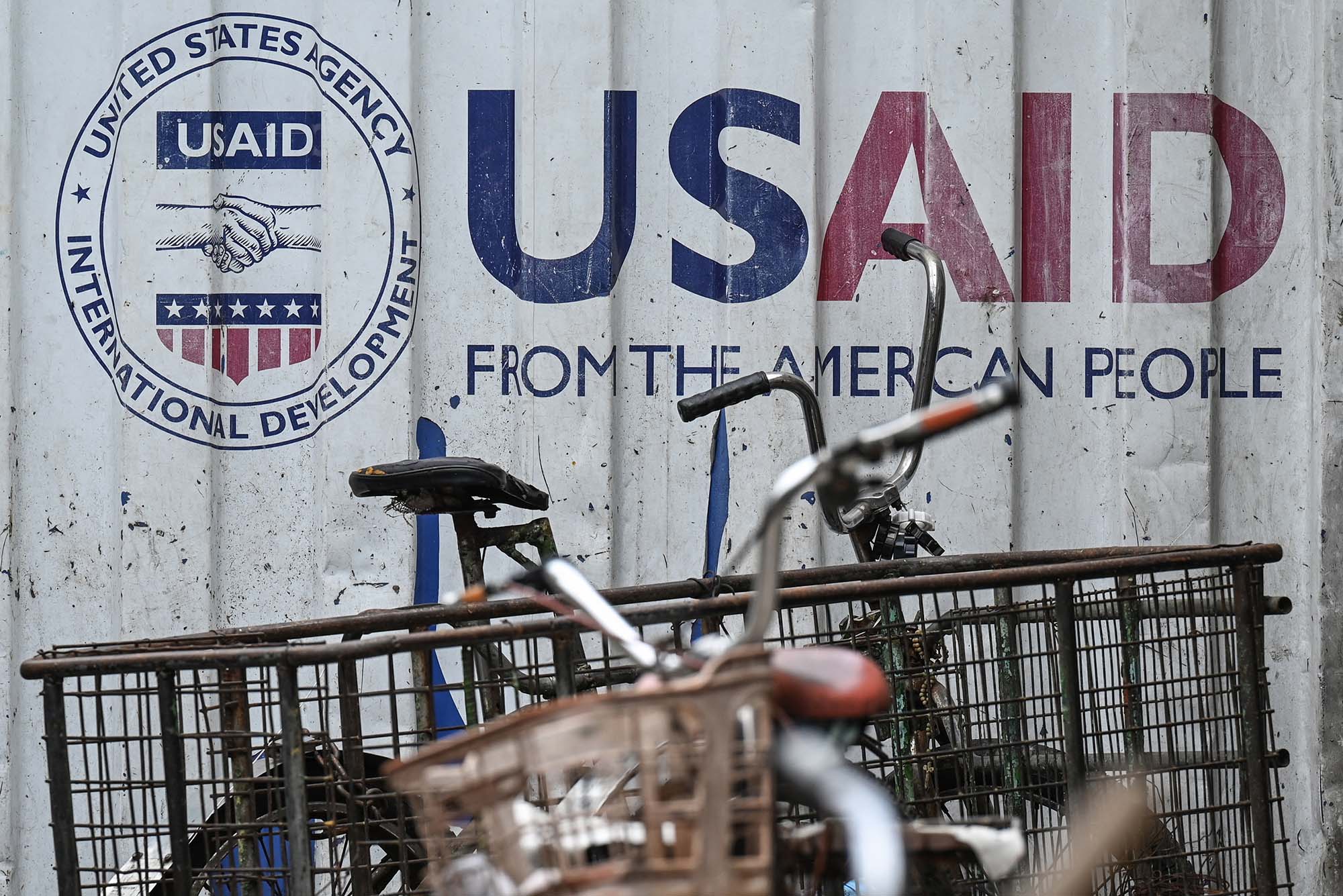
BU Scholar Tracks How Many Deaths May Result from USAID, Medicaid Cuts
The impact trackers developed by BU School of Public Health Professor Brooke Nichols update in real time based on the loss of international aid programs combating HIV and tuberculosis.
FACULTY EXPERTS
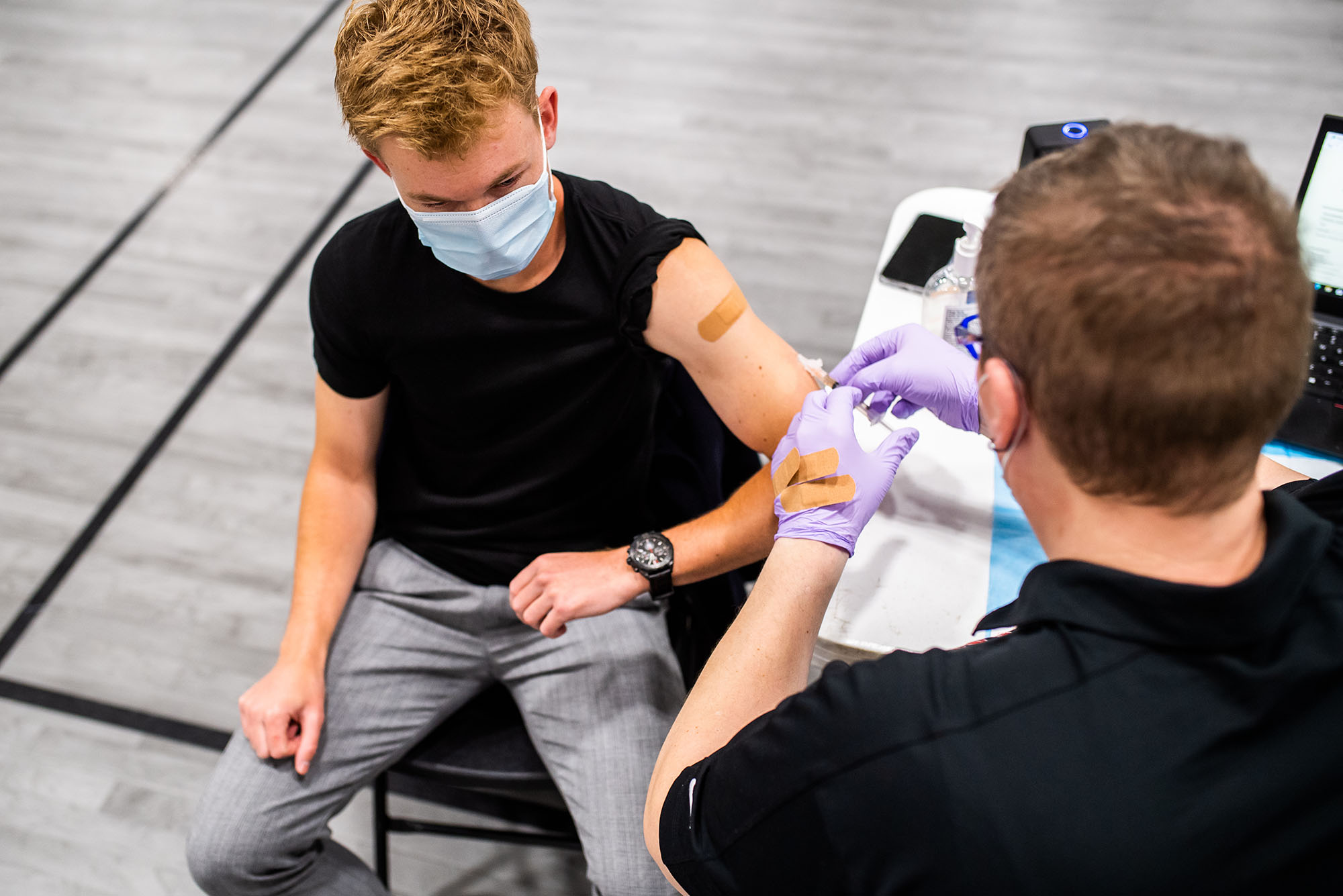
Are We Ready for the Next Pandemic? Five Reasons to Feel Confident—and Five to Be Worried
Five years after COVID-19 lockdowns, BU experts find some glimmers of hope, but say new US policies could put the world at greater risk of a coronavirus-like outbreak.
RESEARCH HIGHLIGHT

Microplastics Could Be Fueling Antibiotic Resistance, BU Study Finds
Researchers were shocked to see that bacteria’s antimicrobial resistance is strengthened when exposed to plastic particles and point to a potential outsized impact on refugees.
THOUGHT LEADERS
In Case You Missed It...
The Boston Business Journal highlights that 50% of BU's incoming class of data science majors are women... BU College of Fine Arts Dean Harvey Young worries the cards are stacked against the humanities right now... BU School of Public Health Professor Eugene Declercq compiled a database tracking pregnancy-related deaths in the United States... BU Wheelock College of Education & Human Development Professor Zach Rossetti asserts that a pending lawsuit threatens accommodations provided for students with disabilities... Jonathan Foltz of BU's Cinema & Media Studies program tackles the controversies around Disney's reboot of Snow White.
Dept. of Education; China Committee; Biology of Aging
BU IN DC
School of Public Health (SPH) Dean ad interim Michael Stein hosted an alumni reception on March 20th. A team of SPH faculty, staff, and students attended the Association of Schools and Programs of Public Health's annual meeting from March 19th to 21st.
Arielle Derival-Joseph of the Wheelock College of Education & Human Development participated in the Council for Opportunity in Education Policy Seminar 2025 between March 16th and 19th.
Stephen Murray of the School of Public Health spoke on a panel about "Developing a Better System of Care for Nonfatal Overdose" at the Hopkins Bloomberg Center in DC on March 17th.
A team of 19 faculty, staff, and students from the Wheelock Education Policy Center presented over 15 papers, chaired five presentations, and led a policy dialogue at the Association for Education Finance Policy Conference from March 13th to 15th.
TRUMP SIGNS EXECUTIVE ORDER ON DEPARTMENT OF EDUCATION
On Thursday, President Donald J. Trump signed an executive order that directs Education Secretary Linda McMahon to reduce the functions of the Department of Education (ED) "to the maximum extent appropriate and permitted by law" while upholding the “uninterrupted delivery of services, programs, and benefits.” The "Improving Education Outcomes by Empowering Parents, States, and Communities" directive also instructs ED to ensure that entities receiving Department funds not engage in "illegal discrimination." While a fact sheet accompanying the order refers to the President's campaign promise to close the Department, a White House spokesperson acknowledged that only Congress has the authority to eliminate ED.
BUZZ BITS...
- On Wednesday, the House Select Committee on the Strategic Competition with the Chinese Communist Party sent letters to six universities requesting information about Chinese students in advanced STEM programs and their involvement with federally funded research. The letter was sent to Carnegie Mellon University, Purdue University, Stanford University, the University of Illinois, the University of Maryland, and the University of Southern California.
- On Friday, President Donald J. Trump issued an executive order which aims to close several federal agencies, including the Institute of Museum and Library Services (IMLS), United States Agency for Global Media, and Woodrow Wilson International Center for Scholars. The order directs the elimination of the agencies "to the maximum extent consistent with applicable law."
- Last week, the Department of Education announced new Title VI investigations into more than 50 universities over allegations of "race-exclusionary practices in their graduate programs” and “impermissible race-based scholarships and race-based segregation.”
EVENT NEWS YOU CAN USE
How does aging work at the biological level? What can we do to promote health as we grow older? And what is the latest science on extending human vitality? The Office of Research and Professors Ana Fiszbein, Brianne Connizzo, and Thomas Perls will bring together more than a dozen BU scholars to deliver micro-talks on their research on slowing, reversing, and preventing age-related disease. Refreshments and conversation will follow the presentations, allowing the BU community to meet potential research collaborators whose work ranges from molecular studies to large-scale projects like the New England Centenarian Study.