Date: Wednesday, November 4
Time: 12:00 – 1:30pm Location: Howard Thurman Center, 808 Commonwealth Avenue, Room 206
A major part of the Tenure and Promotion journey is learning how to navigate through the process. Drawing from the Faculty Development T&P Guide, participants will become familiar with the different types of reviews conducted throughout the promotion process at BU. Additionally, newly tenured faculty, representing multiple departments on campus, will be on deck to share their personal navigation stories and answer questions from participants.
Date: Tuesday, October 20 Time: 12:00 - 1:30pm Location: Duan Center for Computing and Data Science, 665 Commonwealth Avenue, Room 1700
This session of the Journal Publishing Workshop Series will help you navigate the submission and peer review processes, and also build a compelling narrative about your research impact.
STEM and social science faculty within their first five years might find this workshop especially useful, but all are welcome. Attendance at the first workshop in the series is not required for participation.
When applying for tenure and promotion, your research impact is key to developing your dossier. During the first part of our Journal Publishing Workshop, faculty learned how to create a strategic publication plan that aligns with their promotion timeline and departmental expectations.
For those who weren't available to attend, we've complied resources from the workshop to help you learn how to manage your writing timeline, identify target journals, and gain concrete strategies for publishing success.
Open Access Publishing Support: Publish Gold Open Access in select top-tier journals with 100% of APC fees waived through BU’s Transformative Agreements.
BU Open Access Policy: Retain rights to your work and self-archive accepted manuscripts without paying fees or navigating complex publisher permissions.
OpenBU (Institutional Repository): Fulfill funder public-access mandates (e.g. NIH/NSF), track global download analytics, and share OER or research outputs effortlessly via MyCV.
Date: Monday, October 5
Time: 12:00 - 1:30pm Location: Duan Center for Computing and Data Science, 665 Commonwealth Ave, Room 1646
BU Faculty Development invites tenure-track faculty members to a workshop designed to discuss the logistics of the Tenure & Promotion process at Boston University. Participants will learn about the overall standards and criteria of the tenure and promotion process. In addition, each participant will receive a digital Faculty Development tenure and promotion Guide that includes the following information on dossier contents/preparation and types of reviews (e.g. external/internal reviewer selection criteria and flowcharts of review levels/timelines). Most of this workshop focuses on preparing dossier contents.
If you have a disability (including but not limited to learning or attention, mental health, concussion, vision, mobility, hearing, physical or other health related), require communication access services for the deaf or hard of hearing, or believe that you require a reasonable accommodation for another reason please contact bufacdev@bu.edu.
Date: Wednesday, August 26
Time: 11 am - 1 pm (Open to all BU Faculty after 11:30 am) Location: Duan Center for Computing and Data Science, 17th Floor, 665 Commonwealth Avenue
BU Faculty Development is excited to invite you to the annual Faculty Resource Fair on Wednesday, August 26.
This resource fair is meant to introduce and reacquaint faculty with campus resources and partners that aid in faculty research, teaching and learning. The first portion of the fair is reserved for new faculty as part of the Faculty First Institute orientation programming. After 11:30 am, the fair will open to all faculty who wish to participate. The fair will give faculty the opportunity to network, connect with the greater BU community, and find resources for the classroom and beyond.
Beverages will be served throughout the event and lunch will be provided. Please RSVP using the form below.
Date: Wednesday, August 26 - Thursday, August 27 Location: Duan Center for Computing and Data Science, 665 Commonwealth Avenue, 17th Floor
BU Faculty Development is launching the Faculty First Institute (FFI), a comprehensive approach to onboarding new faculty across colleges, ranks, and disciplines in summer 2026. FFI strives to provide a robust yet manageable introduction to BU that helps all new faculty feel supported, informed, and poised to do great things.
FFI's organizers will invite all new faculty to participate in a series of resource and skill-based activities on August 26 and 27. View the itinerary below:
August 26
Faculty Resource Fair
11:00 - 11:30 am: New faculty cohort has advanced access
11:30 am - 1:00 pm: Doors open to all BU faculty
August 27
10:00 am - 12:00 pm: Conducting Research at BU
12:00 - 1:00 pm: New Faculty Lunch
1:00 - 4:15 pm: Teaching & Learning sessions:
1:15 - 2:45 pm: (Session 1) Starting Strong: Laying a foundation for success in the BU Classroom
We are pleased to announce the formation of a Faculty Development Advisory Board, created to assist the Faculty Development team as it supports school and college programming and designs new offerings, all intended to support faculty across all stages of their careers. This group will help ensure that Faculty Development’s programs, priorities, and investments are responsive to Boston University’s strategic framework and grounded in our shared commitment to excellence, inclusion, and impact.
Why an Advisory Board?
As higher education evolves, so too do faculty needs. Changing research expectations, teaching modalities, institutional priorities, and the realities of balancing professional and personal responsibilities are just a few of the issues faculty face. To help faculty meet those challenges effectively, the Faculty Development team needs structured, ongoing input from both faculty and those who support them.
The Advisory Board is designed to provide that input. It creates a regular forum for thoughtful engagement, allowing the Faculty Development team to test ideas, identify emerging needs, and refine initiatives. Just as importantly, it will help to ensure that Faculty Development remains aligned with what matters most to faculty.
What Will the Board Do?
The Faculty Development Advisory Board will:
Provide strategic guidance to the Faculty Development team
Identify faculty needs, both immediate and long-term
Review and offer input on proposed initiatives, helping to shape their design and impact
Contribute to the development of a strategic plan for faculty development efforts
Serve as a sounding board for new ideas and ongoing challenges
Share diverse perspectives from across disciplines, career stages, and experiences
Act as ambassadors, helping to communicate opportunities to and obtain feedback from colleagues
An initial area of focus for the Board will be engaging with the findings and recommendations of the National Academies of Sciences, Engineering, and Medicine (NASEM) Caregiving Study, particularly as they relate to faculty support and institutional policy.
Executive Director, Faculty Actions, College of Arts & Sciences
Emelia J. Benjamin
Interim Associate Dean, & Professor, CAMED & SPH
Kristen Gallagher
Director, Faculty Actions, Questrom
Margarita Guillory, ex officio
Professor, CAS Religion; Faculty Fellow
Naveen Inim
Communications, Provost’s Office
Michael McClean
Associate Dean & Professor, SPH
Lloyd Munjanja
Director of Research Development
Maureen O’Rourke, co-chair
Associate Provost & Professor (LAW)
Hee-Young Park, co-chair
Interim Dean & Professor, CAMED
Davida Pines
Associate Dean & Associate Professor, CGS
Jessica Silbey
Associate Dean & Professor (LAW)
Vincent Stephens, ex officio
Assistant Provost, Faculty Development
Indara Suarez, ex officio
Associate Professor, CAS Physics; Faculty Fellow
Joyce Wong
Professor, ENG
Why It Matters
Strong faculty development is essential to academic excellence. It supports innovation in research and teaching, strengthens recruitment and retention, and helps build a community in which all faculty can thrive. The Advisory Board will help ensure that our efforts are well-designed, inclusive, and effective.
We Want to Hear from You
While the Advisory Board will play an important role, it is not a substitute for broad faculty input—it is a conduit for it. We encourage you to share your ideas, concerns, and suggestions:
What support would make the greatest difference in your work?
Where do you see gaps in current offerings?
What should we prioritize in the coming years?
You can share feedback directly using the form below. There will also be additional opportunities for input as we develop our strategic plan.
Faculty Development Advisory Board Feedback
The Faculty Development Advisory Board is not a substitute for broad faculty input—it is a conduit for it. We encourage you to share your ideas, concerns, and suggestions.
The most successful faculty achieve excellence through setting goals, employing a range of resources, and planning effectively. BU Faculty Development welcomes faculty to attend the virtual workshop "Every Semester Needs a Plan."
Early and mid-career faculty, faculty in mentee roles, and faculty mentors will benefit most from this workshop.
This workshop will help participants do the following:
Identify personal and professional goals for current or future semesters
Discuss the steps to create a strategic plan based on goal setting
Establish the types of community, support, and accountability faculty need
Take time out of their schedule to complete a strategic plan for current or future semesters
When faculty register for the workshop, they will receive Zoom information.
BU Faculty Development is excited to provide faculty with a structured opportunity to learn about strategies for completing second and third books, and to learn more about ways to secure potential funding for their projects.
Our panel of highly accomplished scholars includes Professor Japonica Brown-Saracino (Sociology), Professor and BU Faculty Development Faculty Fellow Margarita Guillory (Religion), Professor Susanne Sreedhar (Philosophy), and Professor Chad Wiliams (History). Space is limited, so be sure to RSVP in advance!
BU Faculty Development and Faculty Affairs present the 2nd New Faculty on Tap which highlights and celebrates the research and teaching of BU faculty hired within the past year. Inspired by the popular Research on Tapevents hosted by the Office of Research, we are excited to create a forum for sharing knowledge and building community.
New Faculty on Tap will feature a series of 4-minute “microtalks,” where new faculty will present on topics related to their research or teaching. The presentations will be followed by a reception, providing an excellent opportunity for new faculty to network and engage with the presenters.
If you have any questions about the event please email BU Faculty Development and a staff member will respond in a timely fashion: bufacdev@bu.edu.
Meet the Presenters
Hiba Aleem
Microtalk Title: "Crisis, Culture, and Commodification: Popular Culture and the Making of Modern Asia"
Before joining KHC, Hiba Aleem taught Literary Methods, Academic Writing, and Global Literature and Film in the Department of English, Writing, and Communication at Emmanuel College, Boston. She has also been a Fulbright Scholar from Washington College, Chestertown, and has more than seven years of experience teaching undergraduate and graduate courses in English literature, postcolonial literatures in English, and academic writing. She is the co-editor of a two-volume anthology on Asian popular culture, Contemporary Asian Popular Culture: Squid Game, Utopias, and Dystopias (Palgrave, 2025) and Contemporary Asian Popular Culture: Cultural Dynamics and Global Impact (Palgrave, 2024), and her work has also been published in Critical Interventions in Theory and Praxis (Routledge), ImageText, and JSL, with two forthcoming papers on the intersections between gender, race, and globalization in press with Routledge and Lexington Books.
Her research and pedagogical interests lie in digital rhetoric, popular culture, women’s studies, comics studies, and postcolonial and global literatures in English, and she has presented invited talks and papers on the intersections between gender and nationalism, narrative, rhetoric, social media, and inclusivity in education at Massachusetts Institute of Technology, Emmanuel College, Central Connecticut State University, Assumption University, and Delhi University.
Deborah Breen
Microtalk Title: "Encountering the Archive: Student Experiential Learning in the BU Archives"
Deborah (Deb) Breen has taught in the CAS Writing Program at several different times since 2006. She has a long-standing interest in material culture, representations of history through cultural institutions and digital platforms, and in community-based memory projects. She has also taught American History, Global History, and Digital Humanities classes at other institutions in Massachusetts and North Carolina.
Deb loves to create experiential, collaborative, and reflective learning experiences for students. She also enjoys developing learning experiences that integrate interpretations of place, whether through archival research, connecting to the campus and outdoors, or in local communities.
Deb has also worked in supporting faculty in their teaching in Australia and at Boston University and looks forward to supporting students in their learning journeys at BU.
Dan DiPiero
Microtalk Title: Big Feelings: Queer and Feminist Indie Rock After Riot Grrrl
Dan DiPiero is a musician, writer, and Assistant Professor of Music at Boston University. His research focuses on the affective connections between aesthetics and politics, with a particular emphasis in U.S. improvised and popular music.
Dan is the author of Big Feelings: Queer and Feminist Indie Rock After Riot Grrrl, forthcoming with the Tracking Pop series at University of Michigan Press. The first academic monograph to seriously consider feminist indie rock from beyond the 1990s, Big Feelings discusses bands like Soccer Mommy, Indigo De Souza, Vagabon, The Ophelias, SASAMI, and other young artists who are remaking what rock music means in the present moment. It also situates these musicians in essential socio-cultural contexts, helping readers understand how the music matters, and looping in the voices of fans along the way.
Dan’s first book, Contingent Encounters: Improvisation in Music and Everyday Life (University of Michigan Press, 2022), is an interdisciplinary exploration of improvisation as it appears across contexts. Through a series of nested comparisons, it aims to explicate a nuanced understanding of what improvisation is, how it appears, and what it helps us to think about, socially, musically, and politically. Contingent Encounters was a finalist for the International Association for the Study of Popular Music Book Prize in 2023.
Francis Issah
Microtalk Title: "Practicing Linguistic Justice through the Framework of Ubuntu"
Born and raised in Tamale, Ghana, Dr. Issah considers himself a global citizen. Apart from his native country of Ghana, he has taught English language and literature in Togo and Burkina Faso. Prior to coming to the United States, he was a high school teacher and a university lecturer in Ghana for a combined total of sixteen years. Dr. Issah comes to BU from Wayne State University, where he taught introductory college composition, intermediate writing, technical communication, and rhetorical theory. He is currently working with two other colleagues on an edited collection titled Globalizing Ubuntu in Rhetorical Discourse and Pedagogy: Theory, Methods, and Practice. This book project will be published by the University of South Carolina Press. Dr. Issah is married to Gifty, and together they have three adorable children: Abigail, Zipporah, and Caleb. He likes to spend a lot of time with his family as well as travel and cook.
Sasha J. Kramer
Microtalk Title: "From space to the deep sea: Remote sensing of surface ocean phytoplankton and the biological carbon pump."
My research aims on characterize surface ocean phytoplankton communities using a combination of in-water samples and remote sensing data on local to regional to global scales. From these surface ocean measurements, I then consider the implications of changing phytoplankton community composition (PCC) for broader biogeochemical cycles (e.g., the biological carbon pump and ocean carbon export) and in response to extreme events like coastal wildfires. My work is highly interdisciplinary and combines oceanographic fieldwork, ocean color remote sensing, and lab work using optical and molecular tools.
David Lake is an Assistant Professor in the ECE department at BU, where his research focuses on quantum hardware using photonics and superconducting devices. He earned his Ph.D. in Physics from the University of Calgary and later held positions as a Postdoctoral Scholar and Research Scientist in the Applied Physics Department at Caltech.
Yakeel T. Quiroz
Microtalk Title: Rewriting the story of Alzheimer’s in multicultural populations
Dr. Quiroz is Professor in the Department of Psychological & Brain Sciences at Boston University, where she leads the Multicultural Alzheimer’s Prevention & Protection (MAPP) Lab. She previously served as Associate Professor of Psychiatry at Harvard Medical School and spent over a decade at Massachusetts General Hospital (MGH) directing innovative clinical and research initiatives. Dr. Quiroz earned her MA in cognitive neuroscience and PhD in clinical psychology from Boston University and completed specialized postdoctoral training in neuropsychology and neuroimaging at MGH/Harvard Medical School.
Her research focuses on identifying early cognitive and biological markers of Alzheimer’s disease and uncovering mechanisms that support cognitive resilience and delay dementia onset. For over 20 years, she has studied Colombian families with early-onset autosomal dominant Alzheimer’s disease (ADAD) caused by mutations in the Presenilin-1(PSEN1) gene. With near-complete penetrance and symptom onset in the forties, these families offer a rare opportunity to track the biological trajectory of AD from preclinical to clinical stages—and to investigate protective mechanisms in individuals who remain cognitively resilient despite carrying the mutation.
Dr. Quiroz leads multiple NIH-funded studies, including the Colombia-Boston (COLBOS) biomarker study of autosomal-dominant Alzheimer’s disease, the Boston Latino Aging Study (BLAST), and the Healthy Aging and Resilient Brain Study on genetic modifiers of cognitive resilience. She is also a Co-Investigator on the Harvard Aging Brain Study (HABS) and the Alzheimer’s Clinical Trials Consortium (ACTC).
Dr. Quiroz’s work has earned national and international recognition, including the NIH Director’s Pioneer Early Independence Award, the International Neuropsychological Society (INS) Early Career Award, and the Alzheimer’s Association’s Inge Grundke-Iqbal Award for most impactful research.
Megan Stoessell
Microtalk Title: "Community as Classroom: The Benefits of Sending Students Into the Field."
Lifestyle journalist Megan Stoessell joined the College of Communication in 2025 after a decade at Johnson & Wales University, most recently in the Media & Communication program. Stoessell spent the first half of her career as a reporter and an editor. She left her role running The Improper Bostonian, a city magazine, to live in France for four years with her family. While overseas, she began contributing food and travel articles to The Boston Globe. Her work has also appeared in The Washington Post, Newsday and National Geographic, among other publications. Stoessell earned a master’s degree from Columbia Journalism School and a bachelor’s from the University of Virginia.
 Microtalk Title: "Crisis, Culture, and Commodification: Popular Culture and the Making of Modern Asia"
 Microtalk Title: "Encountering the Archive: Student Experiential Learning in the BU Archives"
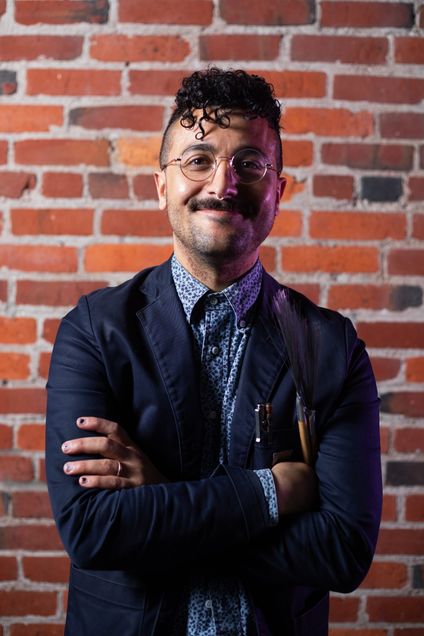 Microtalk Title: Big Feelings: Queer and Feminist Indie Rock After Riot Grrrl
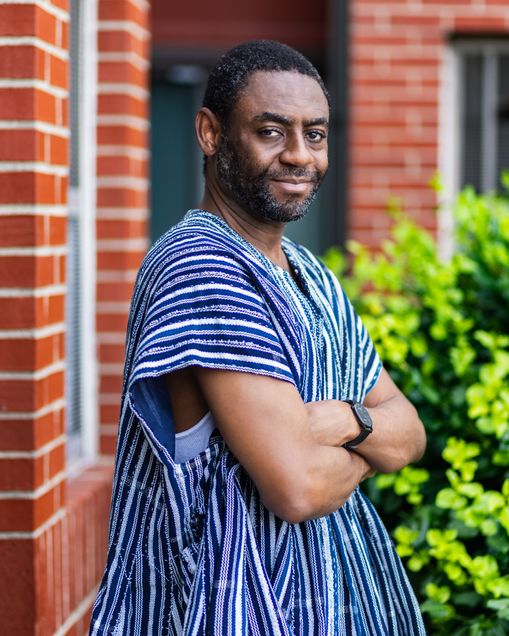 Microtalk Title: "Practicing Linguistic Justice through the Framework of Ubuntu"
 Microtalk Title: "From space to the deep sea: Remote sensing of surface ocean phytoplankton and the biological carbon pump."
 Microtalk Title: "Quantum Interconnects: Bringing Quantum Technologies Together".
 Microtalk Title:
  Microtalk Title: "Community as Classroom: The Benefits of Sending Students Into the Field."