How CMOS Sensors and AI Are Making Fermentation Smarter
In recent years, social media users have found themselves amid many sourdough accounts and kombucha channels, all heavily focused on fermentation. But what many don’t realize is that fermentation isn’t limited to cooking. In the world of science, fermentation technology is widely used to produce medicines, fuels, foods, and specialty chemicals. Professor Rabia Yazicigil Kirby, an Associate Professor of Electrical and Computer Engineering at Boston University, puts it this way: “Industrial fermentation is a lot like baking bread at an enormous scale – except instead of dough, we’re growing living microbes.” These microbes are then used to preserve food, increase nutrient availability, and produce life-saving antibiotics, among other uses.
But once fermentation moves from the kitchen counter to an industrial tank, the microbes disappear into a bioreactor (a sealed vessel), and manufacturers are often unable to see whether conditions inside are helping or hurting the batch. This is where the Complementary Metal-Oxide-Semiconductor (CMOS)-based electrochemical sensors come into play. In their project “Infermenter Cell Datastreams: Wireless Networks of Free-Floating Microbial-Electronic Sensors,” Professor Yazicigil Kirby and her Co-PI, Professor Miguel Jimenez, Assistant Professor of Biomedical Engineering, aimed to continuously monitor conditions throughout the reactors, allowing manufacturers to detect problems early, respond dynamically, and optimize their performance.
The CMOS-based electrochemical sensors “function like tiny ‘electronic noses’ for the bioreactor, continuously detecting chemical changes in the environment and converting them into digital information,” says Yazicigil. CMOS is a technology that enables researchers to build small, inexpensive sensors capable of monitoring conditions inside the bioreactor. By measuring the electrical signals produced by redox reactions (chemical reactions in which electrons are transferred between species), the sensors provide real-time information about the conditions inside the tank – a level of visibility that was previously difficult to achieve. Spatial coverage is also significantly increased because the sensors are small, energy-efficient, and free-floating, enabling their distribution throughout the reactor. According to Yazicigil, the sensors act like buoys, moving through different regions of the tank to collect a “more complete picture of what the microbes are actually experiencing.”
These sensors allow the team to gather measurements at both spatial and temporal resolutions, with continuous monitoring throughout the process. The team is also integrating whole-cell biosensors that can report on stress responses experienced by the cells themselves, creating a multidimensional data stream that reads out how the tank conditions change over time and space.
The portion of the project supported by the National Science Foundation (NSF) focuses on engineering bioluminescent Y. lipolytica strains, an important biomanufacturing microorganism. This enables direct monitoring of complex biological signals from cells in the bioreactor. Overall, this work is laying the foundation for AI-driven fermentation control strategies.
When speaking about the implementation of AI and machine learning, Professor Yazicigil discussed how generating dense datasets from these sensors can build much more accurate predictive models – or “digital twins” – of the fermentation process. These models can then identify patterns that humans may miss and recommend adjustments before productivity declines.
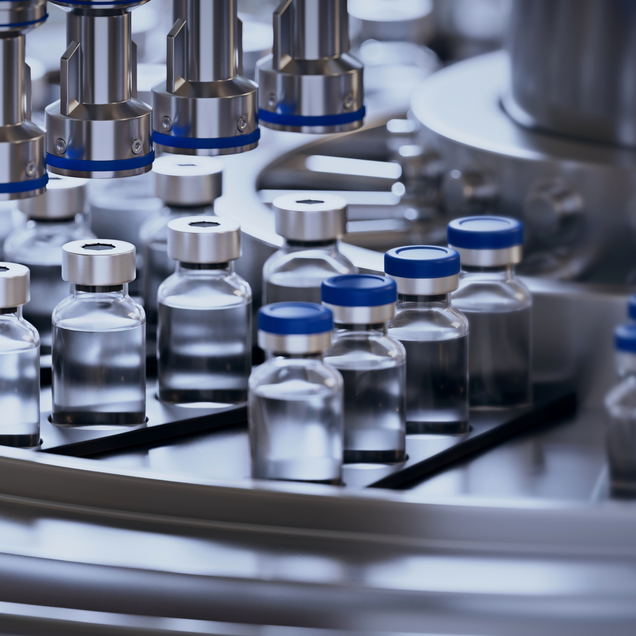 Many industries stand to benefit immensely from this technology. Pharmaceutical manufacturing can have more reliable biologics and faster development processes, while food production can benefit from more robust microbial cultivation. Even beyond industrial biomanufacturing, opportunities arise in environmental monitoring, such as tracking contaminants in water systems, and in biomedical diagnostics, improving measurements in healthcare and clinical settings.
This project has received a joint award from BioMADE (the Bioindustrial Manufacturing and Design Ecosystem) and the NSF, and has been a collaborative effort with Capra Biosciences, enabling the translation of their research from the lab into real-world industrial settings. With this powerful collaboration with industry, Yazicigil and Jimenez have designed innovative, practical solutions.
Looking at the future, Yazicigil hopes their work can “establish a new paradigm for monitoring and controlling biomanufacturing processes: one where [they] can move from sparse measurements and reactive control towards intelligent, autonomous systems informed by rich, real-time data.” She hopes to optimize processes, reduce costs, and lower the environmental impact of bioindustrial manufacturing. She also sees the work extending well beyond industrial fermentation, with important applications in healthcare and environmental monitoring.
As industrial fermentation remains the backbone of industries such as medicine and food production, the ability to collect high-resolution data is essential, not optional. Combined with intelligent data modeling, CMOS-based sensors mark a decisive shift from reactive to proactive control of tank conditions. This innovation has laid the foundation for a future in which biological systems can be better monitored, understood, and guided.
 Professor Rabia Tugce Yazicigil is an Associate Professor of Electrical and Computer Engineering and Faculty Affiliate of the Center for Information and Systems Engineering at Boston University. She is also a Visiting Scholar at MIT. At Boston University, Yazicigil leads the Wireless Integrated Systems and Extreme Circuits Laboratory (WISE-Circuits Laboratory) which focuses on innovating integrated systems derived at the intersection of analog and radio frequency circuits, signal processing, security, and communications.

Professor Miguel Jimenez, PhD, is an Assistant Professor of Biomedical Engineering and a faculty member in the Division of Materials Science & Engineering at Boston University. He is affiliated with the Biological Design Center, the Molecular Biology, Cell Biology & Biochemistry (MCBB) program, and the Nanotechnology Innovation Center (BUnano). His research centers on “microbial devices” and bioelectronic systems that integrate engineered microorganisms with mechanical and electronic hardware.