People
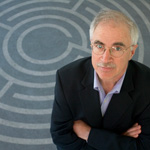 hbe(at)bu.edu Howard EichenbaumThe hippocampus plays a critical role in memory formation, but our understanding of just what the hippocampus does and how it performs its functions are still issues of considerable controversy. To enhance our knowledge about hippocampal function, we are pursuing a combination of neuropsychological studies of the nature of memory loss in animals with damage to the hippocampus and related cortical areas, and we are pursuing electrophysiological recording studies that seek to determine how information is represented by the hippocampus and associated cortical areas. |
||||||
Post Doctoral Associates |
||||||
 davidsul(at)bu.edu David SullivanI received my Ph.D. in 2013 from Rutgers University (Newark), where I worked in Dr. Gyorgy Buzsaki’s lab, studying how various brain rhythms coordinate neurons in the hippocampus and neocortex. Subsequently, I joined Howard Eichenbaum’s lab as a postdoctoral researcher, where I have used a new technical approach — using calcium imaging to record the activity of hundreds of hippocampal neurons simultaneously. This approach affords a clearer big picture of how neurons in the hippocampus support myriad cognitive and behavioral functions, driving us closer to a general understanding of the role of the hippocampus in the mammalian brain. My work encompasses both the experimental and analytical sides of systems neuroscience; in addition to performing experiments in freely moving mice, I have developed a new software package that analyzes calcium imaging movies and extracts neuronal activity in a fast and accurate manner. |
||||||
Graduate Students |
||||||
 dsheehan(at)bu.edu Dan SheehanI tend to focus my efforts on all things awesome. As my graduate career is picking up momentum, awesome things include the ventral hippocampus. |
||||||
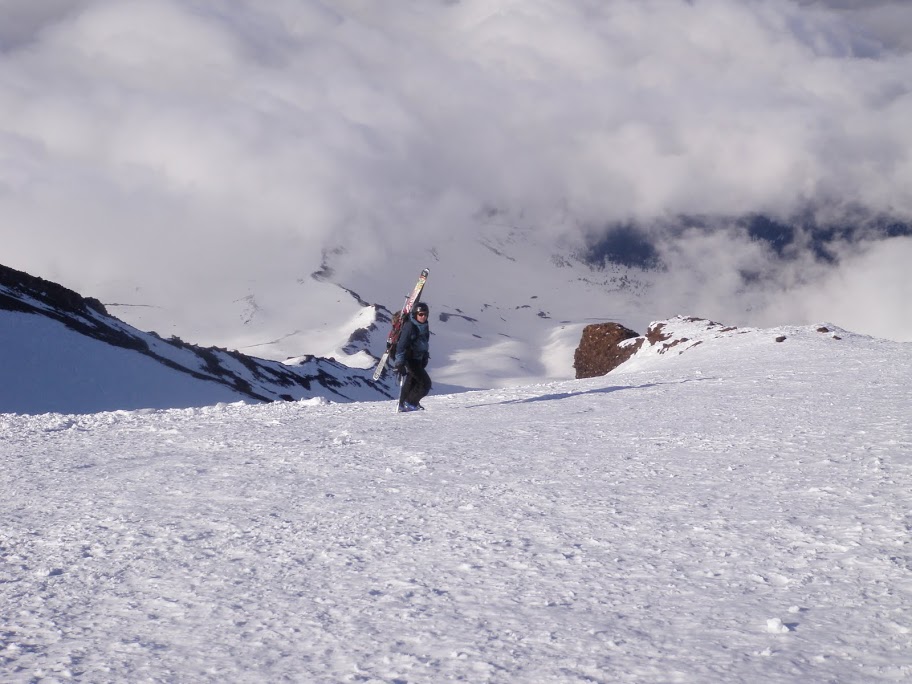 kinsky(at)bu.edu Nathaniel KinskyI am interested in the interplay between cortical areas and the hippocampus during the processes of consolidation/reconsolidation, when short-term memory representations transform/integrate into long-term representations. Through the use of electrophysiological and imaging techniques, I hope to investigate the role that cortical areas, primarily the medial prefrontal cortex, play in this transformation/integration. |
||||||
 John BladonMy background is in patch-clamp electrophysiology, and I have a MA in Anatomy and Neurobiology. I am interested in many things memory, but I focus specifically on the differences between spatial and non-spatial memories. To do this, I use in-vivo electrophysiology and optogenetics to examine the interactions between the hippocampus and cortical regions as the rat plays a memory game. In my free time I snowboard, rock climb, brew beer, and I play tennis and soccer. |
||||||
 Will MauDuring my undergraduate years, I worked in a lab that utilizes extracellular recordings and behavior in rodents to study learning and memory. Since then, I have been addicted to behavioral neuroscience. My current research will use calcium imaging to study the basis for the formation of hippocampal “time cells” and how the responses of these cells evolve over learning. From these studies, I hope to gain a better understanding of the role of the hippocampal formation in episodic memory encoding and retrieval. My hobbies outside of the lab include dabbling in various physical activities such as rock climbing, Ultimate Frisbee, and extreme tee drinking. |
||||||
 cmikkels(at)bu.edu Catherine MikkelsenI graduated from the University of Notre Dame in 2012 with degrees in Mechanical Engineering and Psychology. Since graduating, I have combined these skill sets working for Dr. Eichenbaum helping to build an automated maze and studying prefrontal-hippocampal interactions in rats. I hope to expand on the understanding of this circuit in her graduate work. When not in lab, I can be found riding and caring for her horse Benjamin.
|
Lab Alumni |
|
Research Associates:
|
Graduate Sudents
|