Belize
Belize is a small Central American country bordered by Mexico to the north, Guatemala to the west and south, and the Caribbean Sea to the east. It is culturally diverse, with Indigenous Maya communities, Mestizo, Creole, Garifuna, and immigrant populations. English is the official language, though Spanish, Kriol, and Indigenous languages are widely spoken. Belize has a population of just over 400,000 and a largely rural geography, with many communities located in remote or coastal areas.
The country’s economy relies heavily on tourism, agriculture, and services. While Belize is politically stable and a member of the Commonwealth, it faces challenges related to poverty, climate vulnerability, and access to education and healthcare, particularly outside urban centers.
Belize operates a mixed public–private healthcare system. The public system is overseen by the Ministry of Health and Wellness and provides low-cost or free services to citizens and residents through government hospitals, polyclinics, and rural health posts. Primary care is the foundation of the public system, with services such as maternal and child health, immunizations, and basic outpatient care.
Access to healthcare varies significantly by geography. Urban areas like Belize City and Belmopan have greater access to physicians and hospitals, while rural and island communities often rely on understaffed clinics and community health workers. Specialty care and advanced diagnostics are limited, and patients sometimes seek care abroad for complex conditions.
The private sector plays an important role, particularly for those who can afford faster access or specialized services. Key health challenges include noncommunicable diseases (such as diabetes and hypertension), maternal and child health concerns, infectious diseases, and the ongoing impact of social determinants of health.
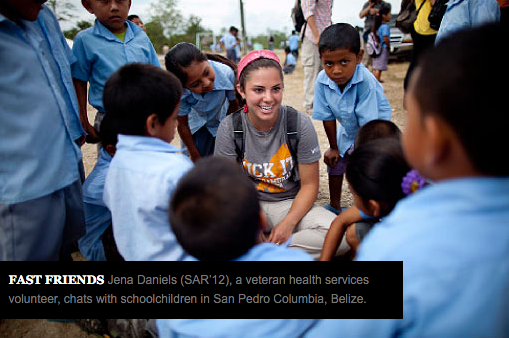
Through this service-learning experience, students gained firsthand insight into Belize’s healthcare system and its emphasis on primary care and community-based services. Students learned about the growing burden of Type II diabetes in Belize by engaging with local healthcare providers, observing clinical and community health settings, and participating in health education and outreach activities. These experiences helped students understand how structural factors—such as limited access to specialty care, geographic barriers, and social determinants of health—shape diabetes prevention, management, and patient outcomes in the Belizean context.
Learn more about our journey in Belize here!