Multi-Participant Template
Mentors


Project Description
The severity of a heart attack is determined by the area of heart muscle affected by the occluded vessel, but also by a ‘border zone’ (BZ) that separates the infarct region from the unaffected heart muscle. The BZ has been implicated in adverse remodeling that occurs after a heart attack, but because the region is difficult to isolate and study using animal models, how BZ biology contributes to disease progression remains largely unknown.
To study BZ biology, the Chen lab is engineering a cardiac microtissue model that recapitulates BZ biology and biomechanics. Together with Claudia Varela, a postdoctoral researcher in the Chen lab, the REU student will help with the design and manufacturing of prototypes of the culture system and conduct experiments to assess BZ induction into the cardiac microtissues. This model will enable studies that elucidate how the region evolves and provide key design criteria for interventions that need to interface with that region, such as the cardiac patches being engineered in CELL-MET.
Research Participants
Program: CELL-MET
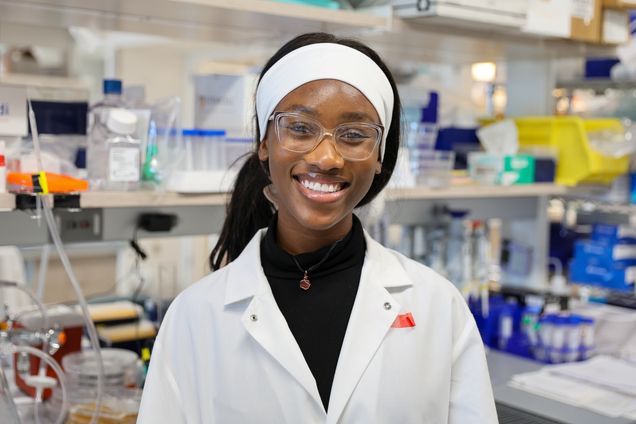
Lea Herbert, Research Experiences for Undergraduates.
Learn More
Teacher name, Research Experiences for Teachers.
Learn More
Research Goals
- Gain technical expertise in device engineering and cardiac biology.
- Wet lab skills such as induced pluripotent stem cell differentiations into cardiomyocytes and cell maintenance, immunofluorescence, PCR, as well as manufacturing of cardiac microtissue culture devices.
- Gain experience in experimental design and data analysis.
Learning Goals
- Manufacture devices, learn cardiac tissue seeding and produce a focal injury to induce a BZ-like phenotype.
- Quantifying biomechanical BZ features: visualize and quantitatively evaluate tissue force as well as perform biological assays to quantify markers of BZ biology.
Timeline
Week 1: Orientation in the lab, manufacturing cardiac microtissue devices, learning iPSCs culture.
Weeks 2-5: Conduct first round of iPSCs differentiation, microtissue seeding, BZ induction protocol and quantification. Optimize induction protocol as needed.
Weeks 6-9: Conduct first round of iPSCs differentiation, microtissue seeding, BZ induction protocol and quantification.
Week 10: Finish data analysis and synthesize final presentation.