NECST Lab Visit: Hardware Acceleration, AI for Health, and More; Politecnico di Milano
Thursday, November 12, 2026 | 3–5 pm
3–4 pm: Lightning Talks
4–5 pm: Networking & Discussion
Location: 665 Commonwealth Ave., CDS 1101
About NECSTLab
The NECSTLab is a laboratory within the DEIB department (Dipartimento di Elettronica, Informazione e Bioingegneria) of Politecnico di Milano. It is a place where research meets teaching through academic and industrial events. At NECSTLab, we believe that a close connection between research and education must be pursued to prepare our students properly. Research and teaching are often seen as a dichotomy, and coupling them in a productive, virtuous cycle has frequently proved challenging. Yet, we believe that research can gain significant benefits from teaching, and vice versa. This principle is the foundation of the NECSTLab. In particular, involving young students in research activities greatly enriches a research group’s creative and brainstorming phases. Students are not yet constrained by a research framework, and they are not afraid to try, and possibly fail, in order to see their ideas come to life through their work.
Event led by Marco D. Santambrogio, Professor, Politecnico di Milano
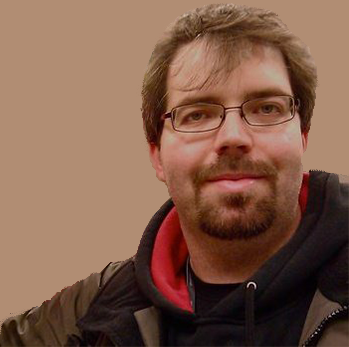 Marco D. Santambrogio is a Professor at Politecnico di Milano since 2018, and an Adjunct Professor del College of Engineering of the University of Illinois at Chicago (UIC) since 2009. He was Assistant Professor at Politecnico di Milano from 2011 to 2018 and Research Affiliate with the Computer Science and Artificial Intelligence Laboratory (CSAIL) at Massachusetts Institute of Technology (MIT) from 2010 to 2015. He received his laurea (M.Sc. equivalent) degree in Computer Engineering from the Politecnico di Milano (2004), a M.Sc. degree in Computer Science from the University of Illinois at Chicago (UIC) in 2005 and his PhD degree in Computer Engineering from the Politecnico di Milano (2008) and we was a postdoc fellow at CSAIL, MIT (2009-2010).
Faculty Host: Ayşe K. Coşkun
Research Line Talks
AIOps & Knowledge Reasoning | Autonomous IT Ops
 Speaker: Marcello Martini
Towards Self-Healing Software: Understanding Failures with AI Agents
Understanding why a cloud-native application fails requires more than detecting an anomaly. Operators must connect evidence from logs, metrics, traces, and system dependencies, often following symptoms across multiple services. AI agents can support this investigation by interacting with diagnostic tools, but access to data alone does not ensure a reliable diagnosis. How should their reasoning, tools, and investigative work be organized?
In this talk, I will present an ongoing research project on agentic root cause analysis for Kubernetes applications. The project combines deterministic telemetry checks with LLM-based symptom interpretation, topology-aware planning, and tool-using agents that investigate possible causes. Using applications and fault scenarios from AIOpsLab, I am comparing alternative architectures through a single-agent baseline and targeted ablation studies. The aim is to understand how these design choices affect detection and localization, their costs in tokens and execution time, and where the path from available evidence to a diagnosis breaks down.
I will also outline two complementary research directions: deep-learning-based tools that help agents process telemetry and extract diagnostic evidence, and the use of knowledge about system topology, service dependencies, operational procedures, and previous incidents to guide investigations. Together, these directions explore how agents can combine learned analysis with structured system knowledge rather than relying on language-model interpretation of raw data alone.
This work contributes to my broader PhD goal of engineering self-healing software systems with Agentic AI. The immediate focus is dependable diagnosis: understanding what agents can establish, where they fail, and what evidence is needed before their conclusions can safely guide recovery actions.
Marcello Martini is a PhD student in Information Technology at Politecnico di Milano. His research focuses on Agentic AI for self-healing software systems, with particular interest in how agents can diagnose failures and support recovery in cloud-native environments. His current work investigates the architectural choices behind multi-agent root cause analysis for Kubernetes applications, examining their effects on diagnostic effectiveness and resource consumption. His broader research interests include how agents can use system and operational knowledge to support diagnosis and recovery in enterprise environments. Before starting his PhD, he worked in software development, an experience that continues to inform his research questions.
HW Acceleration & Edge/Cloud | HW-SW Co-design
 Speaker: Francesco Pesce
Turquoise: A Hardware-Accelerated Architectural Simulator for Sparse Algebra DSAs
The rapid growth of sparse machine learning (ML) workloads has highlighted the limitations in performance and energy efficiency of general-purpose architectures, making large-scale deployment increasingly unsustainable from both economic and environmental perspectives. This challenge has driven the development of domain-specific accelerators (DSAs) for sparse tensor algebra. However, achieving high efficiency in this domain requires extensive design space exploration (DSE), as sparse tensor computations exhibit wide variability in structure, sparsity, and encoding formats.
Performing DSE efficiently remains difficult. General-purpose cycle-accurate simulators, such as gem5, are prohibitively slow for realistic datasets. Moreover, developing accurate architectural models for DSAs in these simulators is complex and error-prone. For this reason, tools like TeAAL and Sparseloop focus specifically on simulating sparse tensor workloads, achieving orders-of-magnitude faster simulation while maintaining suitable accuracy on key design metrics. Yet, the irregularity and workload diversity of the sparse tensor algebra domain require evaluating potential designs across multiple real tensors, and even these tools are too slow for comprehensive DSE.
Turquoise is a hardware generation framework that leverages FPGA acceleration to enable fast and accurate simulation of sparse algebra DSAs. When modeling the state-of-the-art accelerators Gamma and ExTensor, Turquoise achieves accuracy comparable to TeAAL, the leading simulator in this domain, while delivering over two orders of magnitude speed-up on the same dataset. Even including RTL synthesis, implementation, and bitstream generation, steps required only once per simulated architecture, Turquoise achieves an order of magnitude faster simulation time, demonstrating the practicality of hardware-assisted DSE for sparse ML DSAs.
Francesco Pesce is a PhD student in Computer Engineering at Politecnico di Milano. His research focuses on FPGA-based and heterogeneous acceleration for sustainable data centers, with applications in AI inference and data analytics. His work on sparse tensor algebra began with the development of a methodology for accelerating design space exploration of tensor algebra architectures, which is the subject of this talk, and has since expanded to its application in personalized medicine. His research on data analytics investigates the use of FPGAs and AI inference ASICs to improve the energy efficiency of heterogeneous computing systems.
Affective & Health Sensing | Human-Centered Health AI
 Speaker: Laura Ginestretti
Mind Matters: Towards a Machine Learning Model for Cognitive Performance Prediction
Predicting cognitive performance by leveraging physiological, lifestyle, and demographic data is vital for advancing personalized mental health management and improving individual outcomes. This talk presents an explainable regression framework designed to predict cognitive performance while providing meaningful and interpretable insights aimed at its improvement.
To capture both nonlinear and individual-specific relationships present in multimodal datasets, machine learning models such as XGBoost and Linear Generalized Additive Models (GAMs) can be utilized. In this scenario, interpretability plays a central role in translating machine learning model predictions into actionable knowledge for cognitive performance improvement. To this end, SHapley Additive Explanations (SHAP) for global and local feature attribution has been employed, revealing how factors such as physical activity, respiration patterns, and heart rate variability impact cognitive outcomes at individual level. Moreover, Diverse Counterfactual Explanations (DiCE) are used to generate multiple plausible and realistic modifications to input features, giving the possibility to elaborate personalized recommendations that can improve predicted cognitive performance.
The proposed framework is validated on two distinct datasets: the first one comprising real-life oral presentations evaluated by external experts, where XGBoost achieved a 42.5% improvement over baseline; the second one based on standardized computerized cognitive assessments, where Linear GAMs reached a 46.8% improvement. These results demonstrate the benefits of combining strong predictive accuracy with interpretability, supporting tailored cognitive health monitoring and intervention planning. Overall, this work highlights the benefits of multifactorial, explainable machine learning models to optimize individual cognitive performance through personalized, data-driven strategies.
Laura Ginestretti is a PhD student in Biomedical Sciences at Politecnico di Milano and Humanitas University. Her research focuses on cognitive performance, particularly exploring how physiological data from wearables can be utilized with deep learning and machine learning to predict and enhance mental and cognitive outcomes.
 Speaker: Susanna Bardini
From Population Thresholds to Personal Baselines: Inferring Cognitive and Functional Status Across the Lifespan Through Wearables and Ambient Sensing
Wearable devices and ambient sensors are transforming our ability to monitor human physiology in everyday life. Yet translating continuous measurements into reliable assessments of individual state remains an open challenge: ground-truth labels are scarce, signals are non-stationary and device-dependent, and population-level thresholds fail to capture the variability between and within individuals that characterizes free-living data. This talk argues that the reference for interpreting a physiological signal should be the person rather than the population, and presents a framework of personalized and adaptive sensing systems built on this premise.
Under this view, physiological states that are commonly assumed can instead be inferred: modeling warm-up readiness before sport activity as a latent state through a hidden Markov model on heart-rate dynamics replaces fixed-duration protocols with a probabilistic criterion that accounts for each individual’s adaptation history, with coherent estimates across medical-grade and consumer-grade sensors.
Personalization is hardest where labels are scarce, as in free-living stress monitoring; here, embeddings from a pretrained wearable foundation model consistently outperform state-of-the-art handcrafted features under leave-one-subject-out validation, suggesting that learned representations preserve the subject-specific temporal structure that statistical descriptors collapse into population-level summaries. And because such monitoring ultimately takes place in homes and personal spaces, the same principles extend to edge deployment, where multimodal sleep and ambient data are processed on-device and through federated learning, approaching centralized accuracy without pooling sensitive data.
Taken together, these results outline longitudinal monitoring systems that learn what is normal for each person, recognize when a deviation is meaningful, and adapt as that person changes over time. Such systems matter most where change is gradual and individual, from everyday cognitive and functional performance to healthy aging, where a departure from one’s own pattern may signal neurological decline earlier than any population threshold.
Susanna Bardini is a PhD student in Computer Engineering at Politecnico di Milano. Her research focuses on human-centered sensing for digital health, with a particular interest in integrating physiological and environmental data into personalized models of the individual, working towards a digital twin of the user. She explores the application of these technologies to human performance and health across the lifespan.
Immersive & Adaptive HCI | XR & Spatial Interaction
 Speaker: Cecilia Raho
Echoes of the Body: Multimodal Recognition and Sonic Externalization of Contemplative States
In recent years, there has been a growing interest in integrating science, technology, and contemplative practices to foster psychophysiological wellbeing. Yoga and meditation have been shown to produce measurable effects on breathing, heart rate variability, and emotional regulation. In parallel, music has been investigated as a medium to influence internal states. However, there is still a lack of methodological frameworks that connect physiological signals with musical pieces during meditative practices. My talk starts from this idea.
I wanted to explore whether we could recognize the different phases of a yogic practice through physiological signals and audio, and then translate them into music. I focused on the Shambhavi Mahamudra Kriya, a structured practice with five phases, including breathing exercises, chanting, breath retention, and meditation. I collected physiological signals, particularly respiration and heart activity, together with audio recordings during the practice. I developed a machine learning system to recognize the different phases by combining information from the physiological signals and the audio. Then, together with a composer, I created pre-composed musical pieces associated with the different phases. The idea was to connect what was happening in the body with another form of experience: music.
But this project also raised a new question for me. Through the work and the participants’ experiences, I started thinking about whether recognising a specific phase is really the most important goal. Each person can experience the same practice differently, and their physiological responses can change throughout the process. So, instead of focusing only on identifying a state, I became interested in understanding these individual changes and how technology could respond to them.
Could we create interactive environments that adapt to a person’s physiological signals and make their bodily changes more perceptible? For example, changes in breathing or heart activity could influence sound or other elements of the environment. This could create an experience that changes together with the person, rather than simply assigning a label to their state. I think this opens up interesting possibilities for using technology to support body awareness and self-awareness, not only during contemplative practices, but also in sport and everyday life.
Cecilia Raho is a Research Fellow at Politecnico di Milano. Her research interests lie at the intersection of human-computer interaction, affective computing, and sound. She is interested in how physiological and environmental signals can be used to design interactive sound systems and adaptive acoustic environments that support human wellbeing and acoustic comfort.
 Speaker: Teka Kimbi Ntimanputu
Beyond Detection – Context-Aware Human-State Inference for Adaptive Interactive Systems
Interactive systems are increasingly capable of sensing users and adapting their experiences, yet reliably inferring human states remains a major challenge. States such as cybersickness, cognitive load, attention, stress, affective responses, and task engagement shape how people perceive, experience, and interact with technology. However, physiological and behavioral signals are often ambiguous, and their interpretation depends on environmental conditions, ongoing tasks, interaction dynamics, and individual differences. Understanding these states therefore requires moving beyond isolated signals toward a more comprehensive view of the relationship between people and their environments. My research on cybersickness identification provides a concrete example of this challenge. By combining physiological signals with information about the virtual environment and user movement, it investigates symptom onset, severity, and the contextual factors associated with discomfort.
This work highlights how environmental conditions can contribute differently to the emergence and intensity of human responses, suggesting that context is not merely an additional source of information, but a key component in understanding user experience and informing adaptive system design. This perspective opens the door to developing context-aware, multimodal human-state inference methods that integrate physiological, behavioral, and environmental signals to model how human states evolve across tasks and situations. Key challenges include interpreting signals in context, capturing temporal dynamics and human–system interactions, and developing models that generalize across individuals, tasks, and environments. Beyond estimating a person’s current state, the goal is to build models that can support a more continuous understanding of changing user needs and responses. Ultimately, these approaches could enable more adaptive and human-centered interactive systems that respond to individual needs, with applications in immersive technologies, human performance, wellbeing, and human–AI interaction, including embodied AI.
Teka Kimbi Ntimanputu is a PhD researcher in Information Technology at Politecnico di Milano. His research focuses on context-aware human-state inference in extended reality (XR), with a particular interest in integrating physiological, behavioral, and environmental signals to develop models that capture how human states evolve across tasks and situations. He explores how these models can enable more adaptive, human-centered immersive systems and embodied AI, with applications in human performance, wellbeing, and human–AI interaction.