White Lab
 Alice White was a professor at Boston University in the department of mechanical engineering. She received her PhD in Physics from Harvard University.
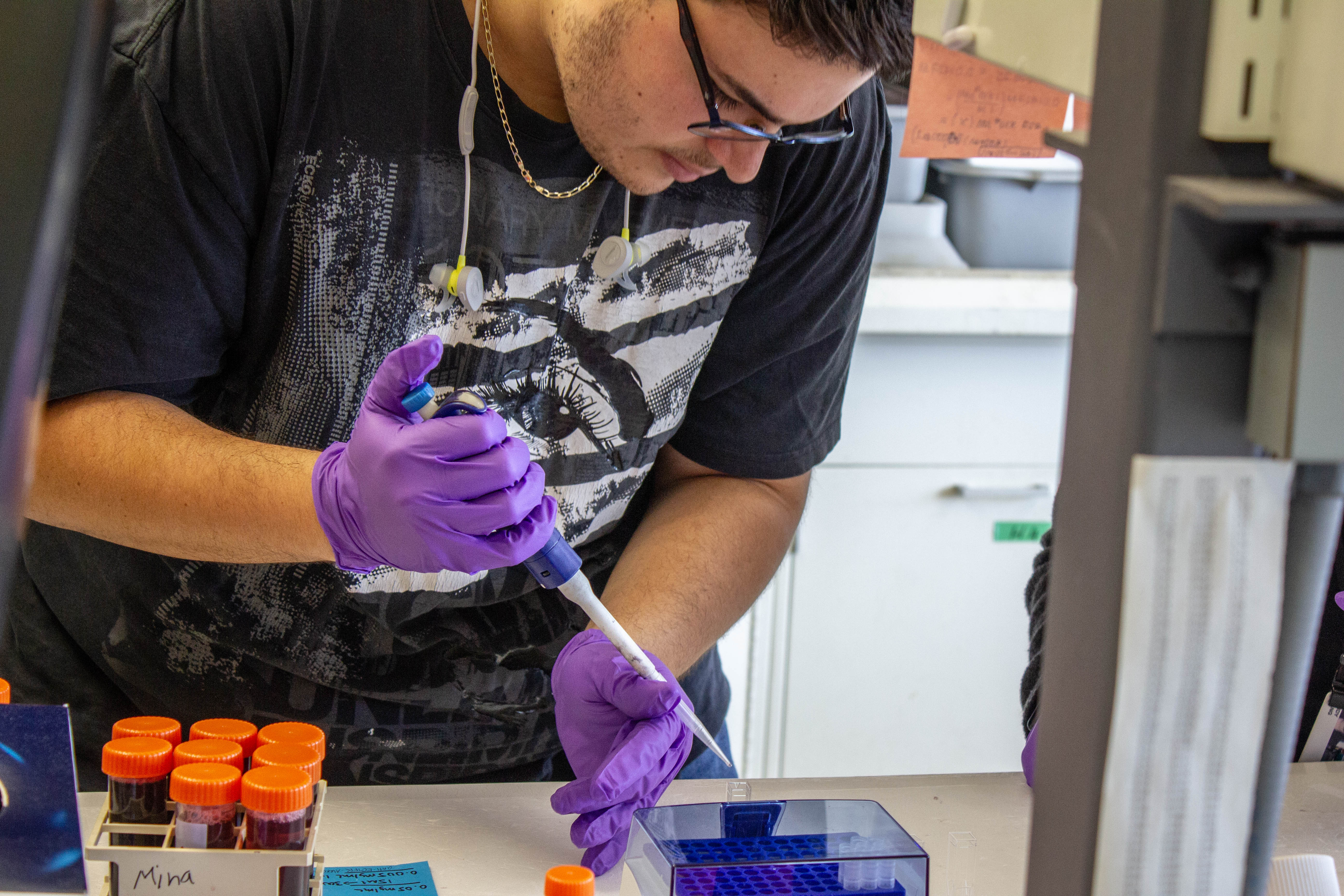
The White Lab uses Two-Photon Polymerization via Direct Laser Writing to make 3D cell scaffolds that deliver mechanical cues to cardiomyocytes, enabling us to study the alignment and function of the resulting tissue.
Participants




Projects
Enabling Multilayer Cell Scaffolds (2021)
PROJECT DESCRIPTION
Under the guidance of an experienced PhD student, the undergraduate will become familiar with the computer-aided design (CAD) software package, Solidworks, which is used in our lab for designing cell scaffolds. This will be done through a series of online tutorials and design examples from our research. Practice designs will be printed on our FormLabs printer by the students, so they can be manipulated and tested. Meanwhile, the student will become familiar with the honeycomb scaffold design that is currently in use and the goal of the project. They will be able to observe the operation of the nanoscale 3D printer (Nanoscribe) and observe the (very tiny!) structures that can be made. If a design that is prototyped on the FormLabs can be successfully assembled into a multilayer scaffold, it will be printed on the Nanoscribe by the PhD student to be seeded with cells. If there is time, the mechanical behavior of the multilayer scaffold will be modeled using COMSOL. The specific research goal was to design a structure and process to enable the robust assembly of multiple honeycomb scaffold layers to create a thicker, multilayer cardiac tissue patch.
LABORATORY MENTOR
Paria Mir Hashemian
LEARNING GOALS
-Understand why scaffolds are important to CELL-MET’s goals.
-Develop a useful level of skill in computer-aided design.
-Gain experience with the design process through rapid iteration enabled by 3D printing.
-Appreciate the importance of thinking about the manufacturing process from the beginning of a design task.
-Understand the relationship between structure design and mechanical properties.
Scaffolds for Heart Tissue Engineering and their Mechanical Responses (2018)
ABSTRACT
This project focuses on designing scaffolds that can be used for heart tissue engineering and simulating their mechanical responses when exposed to the force of an average cardiomyocyte. The designed scaffolds have a honeycomb accordion architecture and were made in both isotropic and anisotropic configurations. The full array of structures measured less than 800um in length and width, and 50um in height. The program Describe (Nanoscribe GmbH, Germany) was used to format the files of the structures, which were then printed with a commercial 2PP system (Nanoscribe Photonic Professional GT, Germany). Structures were also simulated using COMSOL Multiphysics to show the mechanical responses when 5uN of force were acting on the walls, both outward and inward.
CONCLUSION
The Nanoscribe GmbH can be used to print accordion honeycomb structures of less than a millimeter at a useful resolution. With adequate power and scanning speed these structures can be printed and are robust enough to be coated in fibronectin where cardiomyocytes can be cultured. If printed in PETA, or other materials with similar mechanical properties to PMMA, the structures allow for cardiomyocytes (with a force of 5 uN) to stretch as needed. Next steps include confirmation of the material properties.
Cardiomyocyte Actuation with the use of Microfluidic Devices (2018)
ABSTRACT
Actuation devices at the nano and micro scales are in necessity to develop cultured human cardiomyocytes differentiated from induced pluripotent stem cells (iPSCs), because in their early-stages they lack characteristics and properties from adult cardiomyocytes. Therefore, actuator technologies are in demand to stimulate and help emulate the physiology of the adult cardiomyocytes. Through the research of metamaterials, dynamic scaffolds can be designed with incorporated fluid driven actuators using microfluidic devices to provide the necessary stimulation during different phases of the tissue maturity. With the use of Computer Aided Design (CAD) and finite element Multiphysics simulation software, a behavior of the designed actuator can be observed before going into the fabrication and testing phases of the project.
CONCLUSION
After designing multiple structures and developing numerous simulation models to precisely emulate the behavior of the pressure driven actuator, a operational model was successfully designed. This FSI model can be applied to other structures with similar fluid-surface interactions and can be further studied to understand the needed parameters to cause deformation of other microscale actuators. The simulation results shown are based on a parametric sweep, which is a feature that allows to obtain multiple results with different values of a same variable within a single study. The structure was also successfully fabricated on multiple surfaces using different photoresistors. The actuators were observed under a microscope and showed good definition of the features. Overall, these guidelines can be applied to create other actuators and find new application for them.