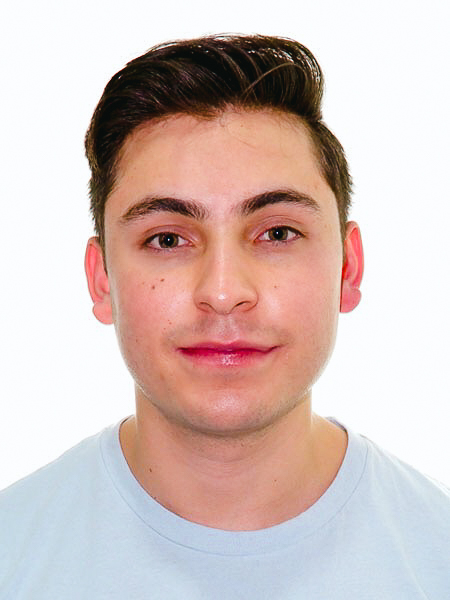
9/16/10 Stephen Forrest, Vice President of Research.
Stephen Forrest is a professor at the University of Michigan. He received his masters and PhD in physics from the University of Michigan.
The Forrest Lab’s research emphasis can be divided into two general areas: III-V optoelectronic integrated devices, and organic thin-film optical devices. There are also projects which integrate the advantageous properties of both of these materials systems.
LabView Program Writing for OVJP System Control (2019)
PROJECT DESCRIPTION
First 4 weeks: The student will work to write LabView programs which can control the entire OVJP system including the gas flow, the temperature control, the shutter, and the motion stages. I have some experience with LabView and will assist in the both teaching the graduate student about the system and understanding how to write these programs. The various electrical components of the system come with default LabView software, so the primary challenge will be getting the different components to interface together in a single program, as well as writing separate LabView structures to control the opening and closing of the shutter.
Second 4 weeks: The student will use the working system to run a series of experiments depositing C60 and measuring the width and deposition of the depositions for a given deposition time at a certain temperature and pressure. From this we will determine how consistently the system is able to deposit the same amount, as well as the expected feature size of the deposition. We will also look to determine how much C60 is deposited after the process of closing the shutter begins.
LABORATORY MENTOR Jeff Horowitz
RESEARCH GOALS The primary goal of this summer is just to get the OVJP working with the shutter over the nozzle. Because of this, the part of the summer which is estimated as the first four weeks is the most important to get right. However, when we get to the point where we can do experiments (i.e. with a fully functional system) there are extremely important things to learn. As described in the previous section, we are looking to understand how consistent the OVJP deposition is, as well as how small the feature size can be. I will then take this data and compare it to DSMC and COMSUL simulation results to determine how well models of the system are working. Additionally, we will determine whether the present shutters are working sufficiently or if there is still significant material depositing.
LEARNING GOALS The student will become proficient in LabView, something which is essential for being able to control external machinery and take data. They will also gain an understanding of fluid dynamics and thermodynamics in the process of understanding the system. In the second half, the student will learn imaging techniques such as SEM and optical microscopy, as well as more generally learning about how to systematically take, interpret, and analyze data in order to understand phenomena.