 |
 |
|
|
|
Vol. IV No. 11 · 27 October 2000 |
|||
|
|||
 |
|||








B.U. Bridge is published by the Boston University Office of University Relations.
Good
Citizens
Kids'
program gets out the vote
By Hope Green
When you go out to your polling place on election day, be careful not to trip over the scooters.
On November 7, thousands of Massachusetts children will be accompanying their parents to the polls as part of Kids Voting USA, a nonprofit, nonpartisan initiative to engage families in the electoral process and teach the next generation about the importance of voting.
|
William
Ketter |
The program works with public schools to develop a seven-week civics curriculum for students in kindergarten through grade 12. Then each election day the children go with their parents to the polls and vote at a separate ballot box. Besides the slate of candidates, the youngsters are given the chance to vote on a condensed list of state ballot questions.
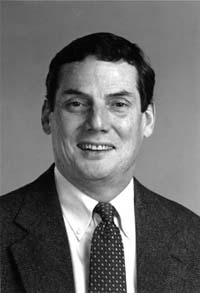
William Ketter, COM professor and chairman of the journalism department, founded the Kids Voting Massachusetts chapter in Quincy five years ago, when he was editor of The Patriot Ledger. The program now operates in 3 Bay State cities and 10 towns, and election officials in those locales have reported 5 to 10 percent increases in voter turnout.
"It’s what we call the trickle-up theory," explains Ketter, now chairman of the chapter’s board of directors. "We hope kids will talk about the issues in their classrooms, go home and continue the discussion at their kitchen tables, and remind their parents of the voter registration deadline. And, of course, on election day we hope they’re tugging at their parents’ coatsleeves, saying, ‘Let’s go vote.’ "
But the benefits of the school curriculum extend beyond this year’s election. By making politics relevant to students’ own lives, teachers can help increase voter participation when the youngsters come of age.
This fall Ketter launched Kids Voting Boston, which has the potential to reach 63,000 more students. Currently he’s recruiting BU students, faculty, and staff to volunteer at the children’s election day polling stations.
Family ritual
Kids Voting USA was started in 1990 by three Arizona businessmen. Traveling through Costa Rica on a fishing trip, they learned that it is customary for parents to take their children with them to the polls, and that the country credits this tradition as a factor in its 80 percent annual voter turnout rate.
By contrast, less than 50 percent of eligible U.S. citizens voted in the 1996 presidential election. Among adults ages 18 to 35, that rate sank to less than 30 percent.
Despite what is shaping up as an exciting horse race between GOP candidate George Bush and Democrat Al Gore, pundits are forecasting no better results in the 2000 presidential race.
Like the Arizona organizers, Ketter believes education is the key to stemming voter apathy.
"Kids look forward to getting a driver’s license," he says. "We want them to look forward to turning 18 so they can vote."
Paper chain polls
The Kids Voting curriculum, says Ketter, is designed to teach children the value of participatory democracy. In one exercise for kindergartners, each child casts a vote by adding a link to one of two paper chains representing, for instance, peanut butter or chocolate chip cookies. When the voting is done, the class compares the length of the two chains to determine the favorite flavor.
Another exercise involves a list of ballot questions with insufficient
information. Students who check off yes next to the words recess, ice
cream, and television learn afterward what their vote really accomplished:
recess will be replaced by 20 minutes of situps and pushups, only
garlic-flavored ice cream will be served in the cafeteria, and television
will be allowed in the classroom – but only the commercials.
Older students explore issues of national concern, such as health care and the environment.
Thus far, Boston schoolteachers say they are pleased with the impact the curriculum has had on their students. Georgia Kalogerakis teaches social studies to immigrant children at the city’s Washington Irving Middle School. "All of them were very excited to see the preparation of the ballot boxes," she says. "They have been counting out registration forms and ballots, tying them up with red and blue ribbons, and distributing them throughout the school.
"One student was quite impressed with our discussion of voting because she’s from Morocco, where they don’t have a democratic society," Kalogerakis adds. "It was quite moving for the rest of the class to hear that."
About 1,000 volunteers are needed to help monitor Kids Voting areas throughout Boston and tally the results. For information, contact Ruth Feldman of City Year Boston at 927-2537 or rfeldman@cityyear.org. Ketter can be reached at wbketter@bu.edu.

4
December 2000
Boston University
Office of University Relations