Lessons from the Pacific: A Q&A With Nik Karr (SPH’13).

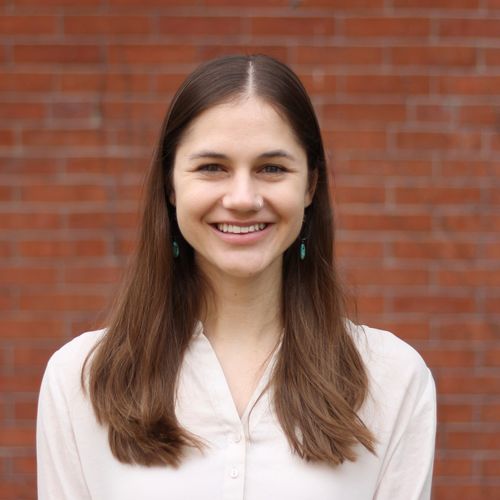
Nik Karr in Pohnpei, FSM (February 2026). Photo courtesy of Nik Karr.
Lessons from the Pacific: A Q&A With Nik Karr (SPH’13)
Nik Karr (SPH’13), a Returned Peace Corps Volunteer and current project manager with The Nature Conservancy, has spent over a decade building climate resilience across the Pacific, from water systems in Vanuatu to restoring ecosystems in Micronesia.
When Cyclone Gita swept through the Pacific island nation of Tonga in 2018, it was the strongest storm to hit the main island of Tongatapu in 60 years. Nik Karr was there as the director of programming and training for the Peace Corps, and watched the devastation unfold. In the weeks that followed, a group of Returned Peace Corps Volunteers from Tonga started Friends of Tonga, a nonprofit dedicated to supporting community-led resilience and recovery. Karr supported the organization’s recovery efforts and later joined its board as a special advisor.
Friends of Tonga was recently named one of five finalists for a 2026 .ORG Impact Award in the Environmental Stewardship category, a distinction that prompted Michael Hassett, Friends of Tonga president and co-founder, to specifically highlight Karr’s contributions.
“Nik has brought his public health expertise to Friends of Tonga’s mission of supporting community-led initiatives that strengthen environmental resilience, improve access to clean water, and promote healthier communities across Tonga,” wrote Hassett. “For a volunteer-run organization with no paid staff, this recognition reflects the dedication of professionals who volunteer their expertise in service of others. Nik’s leadership is an example of how Boston University alumni continue applying their education to improve lives and strengthen communities around the world.”
After earning his Master of Public Health in international health from BUSPH in 2013, Karr spent the next few years on the island of Vanuatu doing what global health and international development work has traditionally looked like: building toilets and water systems, implementing sanitation programs, teaching sexual and reproductive health, and fostering youth leadership.

Nik Karr hiking to his assigned Peace Corps community in Vanuatu (Naviso, East Maewo Island) in 2012. Photo courtesy of Nik Karr.

Nik Karr at the closing of Peace Corps Tonga’s pre-service training with the training manager and language and culture coordinator in 2017. Photo courtesy of Nik Karr.

Nik Karr and The Nature Conservancy Kiwa Women’s Work Project Team in Palau (2026). Photo courtesy of Nik Karr.

Nik Karr at a work planning workshop in Kosrae, FSM (February 2026). Photo courtesy of Nik Karr.
“What the community wanted to work on is a leading focus of the Peace Corps,” says Karr. “The community health program especially, it was figuring out what they want to work on, and then work with them on that. That was the guidance you got. You got some tools to help you out, but you were figuring it out on your own with the community or with your fellow volunteers.”
When his service as a community health facilitator ended, Karr stayed in Vanuatu and later served in Tonga, moving through different roles at the Peace Corps: provincial health management advisor, programming and training officer, and director of programming and training. This deeper dive into cultures and languages allowed him to see the true breadth of possibilities in public health work: he realized that communities were not struggling because they lacked know-how about hygiene, they were often struggling because extreme weather destroyed their water systems and rising seas threatened their crops.
After returning to the U.S., following his service in Tonga, Karr began working at Peace Corps headquarters in Washington, D.C., where he went on to help design the organization’s first global climate strategy. There, he had the opportunity to apply what he had learned in the Pacific about the inseparable nature of public health and climate: human health outcomes in the Pacific would not improve without efforts to address ecosystem health; food security efforts must account for changing weather patterns; lasting change requires local communities to lead the work.
This philosophy forms the foundation of Karr’s current work at The Nature Conservancy, where he leads the Kiwa Women’s Work Project, a multi-country initiative centered on nature-based solutions to restore and protect ecosystems, strengthen food systems, and enhance community resilience to climate change. It is work rooted in partnership, grounded in place-based knowledge, and brought alive by the women of Micronesia.
In a conversation with SPH, Karr reflects on what shaped his unexpected path in the Pacific and what he wishes more public health students understood about the scope of the field.
Q&A
With Nik Karr (SPH’13)
SPH: How did you first discover the field of public health? What led you to pursue an MPH and join the Peace Corps?
Karr: By accident. In college, I wanted to do exercise physiology, physical education. I’m a cross-country runner, long-distance track runner, exercise has always been something that’s interested me. Nutrition, all those things were hobbies already for me, so tying athletics into my academics made sense. But then I started taking more and more courses that tended towards public health. My [bachelors] degree from Western Oregon University is actually in education with a concentration in health promotion.
At some point, someone came in—I think in my junior year, it was during [a] program planning course—and they were talking about Peace Corps, which I’d never heard about, and they were talking about the Masters International program, where you could finish your [graduate] degree with Peace Corps. I was like, Well, that sounds interesting. Why don’t I do that? So I don’t think it was really a conscious decision that I wanted to get into public health, let alone be a project manager. I don’t think I knew what project management was, even though I was taking a program planning course. Back then, it was just: This really interests me, and I like the kind of work that we’re doing.
SPH: Are there any courses you took or professors you had at SPH that stand out for teaching you concepts that you still use today?
Karr: Yeah, absolutely. Managing Disasters and Complex Humanitarian Emergencies [GH 755] with Monica Onyango. She’s amazing. The class was really focused on program planning, so a lot of it was based on developing this monitoring [and] evaluation framework, which I then used for a water project that I was working on in Vanuatu to finish my degree. It was actually the end of my second year of service, so that one probably was the most significant because it directly influenced my work. It was one of those summer classes where you were in it like eight hours a day for four weeks straight and that was terrific.
Another one that I’ve always really thought back fondly on was a public health writing class with Jennifer Beard. I just remember sitting there and being given journal [articles] and being taught how to read them critically, to understand them. I think that really helped set me up for more success later on. Those two courses are probably the ones that stuck with me the longest and provided me with the greatest support throughout my career so far.
SPH: I imagine there is not really a typical day in your line of work, but what might a day in your current role as a project manager with The Nature Conservancy look like?
Karr: Typical would be fun. It’s involved a lot more travel than I was anticipating, just because of the regional nature of it and it’s very collaborative. We work with a conservation trust fund called the Micronesia Conservation Trust. They have a long-term relationship with The Nature Conservancy, so they’re co-managing the project and then we have implementing partners in each of the jurisdictions, so Palau has four states that are implementing partners and in the other jurisdictions, we usually have NGOs, such as the Conservation Society of Pompeii and the Marshall Islands Conservation Society.
An example of what we’re working on is the Palau women are farming mud clams and the women in Yap are also interested in farming mud clams, and we want to design a learning exchange where we bring them all together to share about the traditional processes and what they’ve learned over the years, [so] they could maybe help each other out with improving the success of their activities with mud clams.
I’m either drafting the agreements, facilitating training, working directly with our TNC staff on the ground to troubleshoot ideas and plans around activities, helping to plan and facilitate learning exchanges or regional learning events. I’ve only been in the job ten months now and it’s been a lot of different things. There hasn’t been a typical day yet, which is, I guess, part of the excitement of it. I find it very hard to describe what I do sometimes. There’s a certain level of complexity to it, but it’s fun. It’s always interesting—there’s always something new.
SPH: You have done a lot of work requiring intercultural competency. Have you experienced any memorable miscommunications over the course of your career in the Pacific Islands?
Karr: There’s certainly a lot of that. Usually it’s humorous. When I first landed in Tonga, it was in the middle of a pre-service training, so there was a new group of 30 volunteers there. I went out to the village where they were staying, and I was talking with our training manager and the language and culture coordinator. It was the first time I’d met them. And on the side of the road in Tonga, as you’re driving, there’s all these different coolers that say “niu aisi.” Everything’s pronounced phonetically, so it’s pronounced “new icy” and it means cold coconuts. I kept seeing them along the road, and I was telling them a story about them, but I was using the local language word for coconut from my village in Vanuatu, which was “usi.” I’m telling them this story, and I don’t realize that I’ve switched out the word, and they’re laughing. Literally one of them rolled out of her chair, and I was like, I must be hilarious. Finally, they stop me, and they say, “Nik, you’re saying *sshole. Usi is *sshole.” So I’ve just been telling this whole story about cold *ssholes. It became a long-term joke. We would constantly say it to each other when anything was frustrating.
SPH: What advice would you give current SPH students who are perhaps interested in pursuing a career similar to your own, such as in international development or climate and health?
Karr: Join the Peace Corps. You can do climate adaptation in Tonga—the project is there. Go to the Pacific Islands. They’re amazing and will change your life for the better in all ways. I mean, I’m serious about those two, though I understand it’s a little cliché. The Peace Corps is an amazing opportunity. You learn so much through experience. You gain so many friends and colleagues, and you’re able to do so many just amazing things with amazing people. I’ve had the privilege of being able to do that for 15 years at the Peace Corps, and I’ve had the privilege of being able to do that now with The Nature Conservancy.
I think people put themselves in these boxes: I am public health, and I’ve studied social and behavioral health, so I have to do something that’s similar to these things. But they don’t really think of the skills that they developed through that. Your ability to critically analyze the data that you’re working with or your ability to develop relationships with others or your ability to focus on socioeconomic impacts on communities. You can work in a much broader field and expand what you’re working on or what you’re able to do. There’s a lot of opportunities out there.