From SPH to the UN: An MPH Student Researches Respiratory Health in Ethiopia.

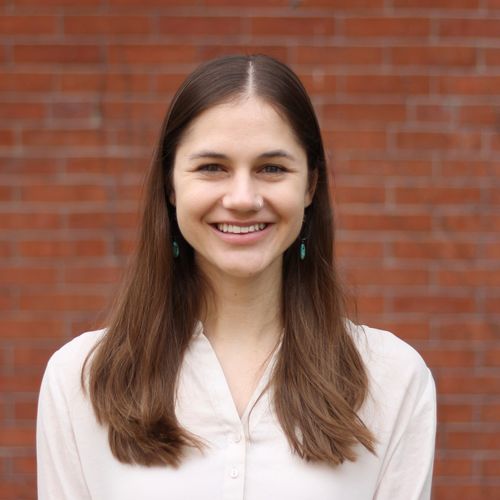
Feven Lencha, an MPH studying epidemiology and biostatistics, at the United Nations in Geneva, Switzerland during the 2026 Global Youth Summit for Change, where Boston University’s Institute for Global Sustainability sponsored her to serve as a delegate. Photo courtesy of Feven Lencha.
From SPH to the UN: An MPH Student Researches Respiratory Health in Ethiopia
What started as a course paper became a research fellowship with BU’s Institute for Global Sustainability, and ultimately led Feven Lencha to the Global Youth Summit for Change in Geneva, Switzerland, where she met with other young leaders to discuss peace, sustainability, and social justice.
Before returning to campus from a visit home to Ethiopia this fall, Feven Lencha stopped at the United Nations Headquarters in Geneva, Switzerland to attend the 2026 Global Youth Summit for Change. There, she collaborated with over 100 other young leaders from around the world on solutions for peace, sustainability, and social justice.
Nearly a year earlier, Lencha sat in a classroom at the School of Public Health, writing what she thought was just another course paper. That assignment—for Individual, Community, and Population Health (PH720)—would become the foundation for a summer research fellowship at Boston University’s Institute for Global Sustainability (IGS), and would ultimately open the door for her visit to the UN.
“I had no idea I would [take it] this far,” says Lencha. “I’m grateful for the entire BUSPH community, for my advisors, and for everyone who supported me. It has already been an incredible one-year journey.”
Public health research is a newfound passion for Lencha, who aspired to become a doctor from a young age. As a child in Wolaita Sodo, a regional hub for healthcare and education in southern Ethiopia, she frequently observed foreign missionaries volunteering in local hospitals.
“I have seen, growing up, how their work has been impactful in my society and in my community,” she says. “[Medicine] was a passion of mine from what I’d seen in my environment.”

Feven Lencha with other delegates of the 2026 Global Youth Summit for Change at the United Nations in Geneva, Switzerland. Photo courtesy of Feven Lencha.
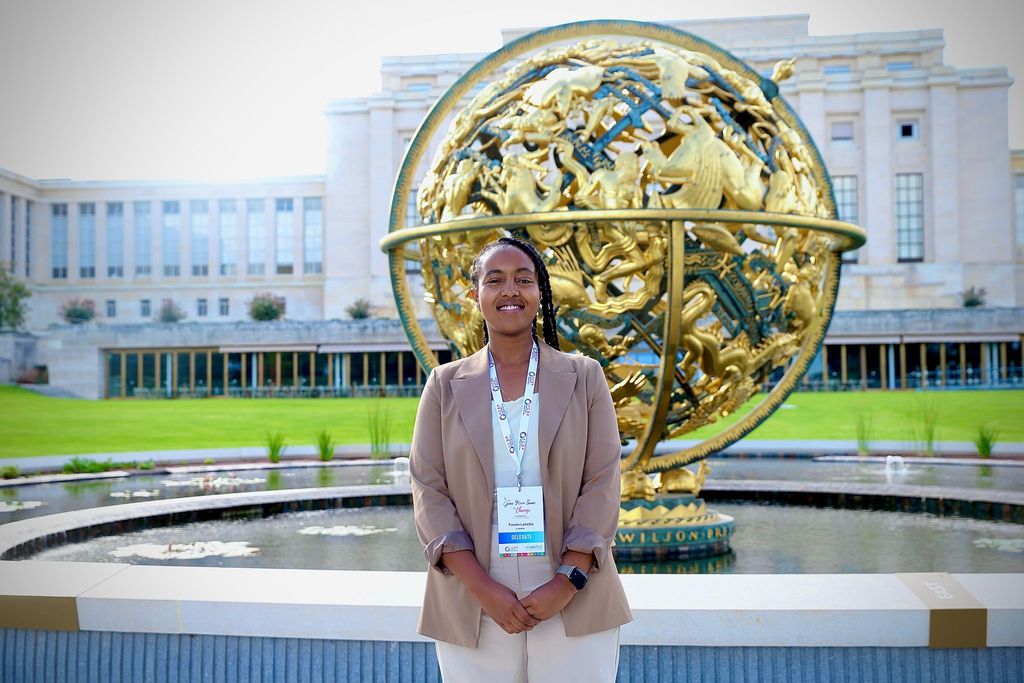
Feven Lencha at the United Nations in Geneva, Switzerland during the 2026 Global Youth Summit for Change. Photo courtesy of Feven Lencha.
After graduating from Hawassa University in 2022 and completing two years of mandatory service as a general practitioner, Lencha enrolled at SPH to study epidemiology and biostatistics and global health. While completing her core coursework during her first semester at the School, she was pleased to discover that she would not have to wait until graduation to apply what she was learning in the real world.
When Sophie Godley, Lencha’s PH720 instructor and a clinical associate professor in the Department of Community Health Sciences, assigned the class to write about respiratory health and biomass fuel use in Ethiopia, Lencha took the initiative to reach out to the former health minister of Ethiopia to discuss related policy implications. Then, later that semester, Lencha noticed an advertisement for the IGS graduate student fellowship on a screen in the Talbot Building. She brought her idea for further epidemiologic study of biomass fuel use and acute respiratory infections to her Foundations in Global Health (PH760) instructor Jennifer Beard. Beard supported her development of a research proposal, and she was accepted to the program in the spring. The pair collaborated on the project over the course of the summer.
“Feven is a superstar! I have so enjoyed working with her over the past year—both mentoring her and learning from her,” says Beard, a clinical professor in the Department of Global Health. “I was fortunate to have had her as a student in my class. She brought wonderful perspectives and examples from her time working as a physician in Ethiopia to our discussions. I have also enjoyed watching her expand her knowledge, skills, and network of mentors as she worked on her IGS project this summer.”
That same summer, Lencha balanced her IGS research fellowship with a practicum at Boston Medical Center (BMC), where she assessed specialty care access across the BMC system and supported Patient and Family Advisory Councils at two recently incorporated hospitals: BMC Brighton, formerly St. Elizabeth’s, and BMC South, formerly Good Samaritan. The experience reinforced her commitment to health equity, and helped to inform the policy recommendations she would develop for her IGS project.

Feven Lencha during her practicum at Boston Medical Center. Photo courtesy of Feven Lencha.
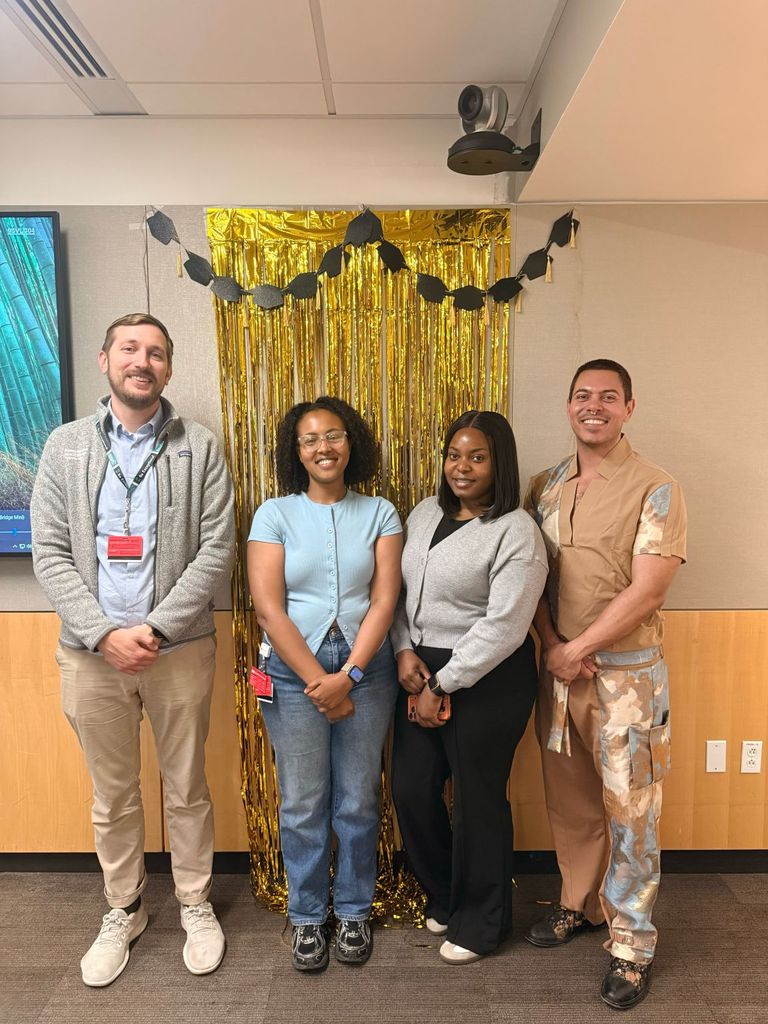
Feven Lencha with colleagues during her practicum at Boston Medical Center. Photo courtesy of Feven Lencha.
“It was really something that was close to my heart, and I really loved doing that. The staff was amazing. Overall, I had a really good experience,” says Lencha. “The team was encouraging me, pushing me to grow.”
Lencha is not entirely sure what is next, but in the long-term, she hopes to become a physician-scientist and bridge her clinical background with her ongoing public health training. Below, she discusses with SPH the moment she realized medicine alone was not enough, how she landed at SPH, and the advice she would give other international students.
Q&A
With Feven Lencha, MPH student
SPH: What was your experience like practicing as a general practitioner after graduating from medical school in Ethiopia?
Lencha: It was an eye-opening experience for me. I was sent to a healthcare facility which was really remote. We did have the building, but no equipment and barely any medicines. I saw that I couldn’t be of any help for the people who came to seek help. And sadly, I do have some stories where I lost a patient that could have been prevented with a better setup. I served there for six months, and it was some tough times. That’s when I realized I needed to go into public health and see what I can do. While I was thinking about that, that’s when I shifted to a hospital in my hometown, where I served for a year and a half. It was helpful, [but] it was a bittersweet moment, I would say.
SPH: How did you hear about BU, and what led you to the MPH program at SPH?
Lencha: Right after my realization with my remote health center experience, I started reaching out to see which school I wanted to do my public health with. I was going through the [SPH] website and I was reading some alumni and students’ stories on the website—I don’t really remember which one it was now, but something honestly made me feel like I belonged there. I knew right at that moment, “I want to do that. I want to go there and be part of the change I want to make in my society.” So I applied. I attended a webinar and Q&A session, and the staff was warm. They made me feel [at] home before even coming [to SPH].
SPH: Could you describe the research you did this summer as a graduate student research fellow with BU’s Institute for Global Sustainability—what did you study, what did you find, and what is next?
Lencha: After getting selected as an IGS Fellow, we had time from the selection to the start of the project in May. I [worked] on modifying my proposal—how I’m going to deal with this and what’s the end goal. We talked with Jen about it, and Jen suggested I also incorporate an expert in quantitative epidemiology as well. That’s when Dr. Alana Brennan [associate professor of global health] came on as my advisor to help with the analytic phase of my work. I used a [Demographic and Health Survey (DHS)] dataset from 2016. It’s collected with help from USAID through a home-to-home survey. My project was a secondary data study, so I analyzed [the] dataset from DHS, [and] showed a higher prevalence of acute respiratory infection among children living in households that used biomass fuel.
Biomass is wood, charcoal, or crop residue, which is a primary means of cooking, especially in sub-Saharan African countries, including Ethiopia. People living in rural areas depend on those fuels to cook their meals. They don’t have access to a stove or electricity. My findings suggested that children in those households have a higher rate of exposure to biomass [and] children having exposure to biomass have a higher rate of acute respiratory infections. My focus was on the recommendation and policy aspect as well. So, I was discussing with some major stakeholders back home about anything we can do to change this situation. I was doing a literature review and coming up with policy recommendations to include child health in our national priority list. We can work on prioritizing having electricity in rural households, but we have to know that preventable deaths—like dying from acute respiratory infection—are a common thing here for children under 5 years.
SPH: If you could offer any advice to other international students who are considering an MPH what would you say to them?
Lencha: I would say it’s definitely worth it. You have to go for it. Just be bold, get ready to ask questions, [and] don’t be scared. There are a lot of resources at BUSPH, and the only thing that we can do is reach out by showing up, by getting involved with networking, and asking—no question is silly. Go for it, ask whoever’s there to ask, and keep looking for opportunities. Don’t limit your potential to one aspect. For example, I would have limited myself just [being] a clinician working with patients in the clinic. But we have to take the harder steps, like going out there and exploring what we are not familiar with.