Heine Discusses New Volume on China’s Belt and Road Initiative in Quincy Institute Interview
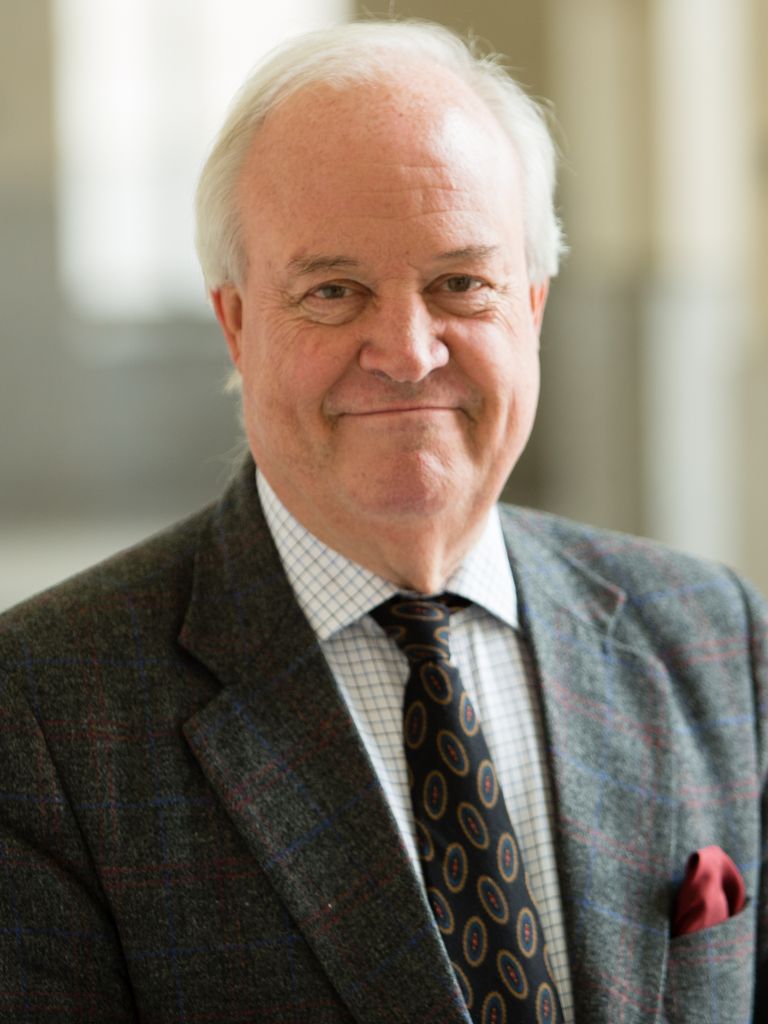
Jorge Heine, former Research Professor at the Pardee School of Global Studies and current non-resident fellow at the Quincy Institute for Responsible Statecraft, recently joined Sarang Shidore, director of the Quincy Institute’s Global South program, to discuss Traversing the Belt and Road: The World According to China and China According to the World (Harvard University Press), a forthcoming edited volume, that examines China’s Belt and Road Initiative (BRI) more than a decade after its launch.
Co-edited by Heine, Min Ye, professor of international relations at the Pardee School; Grant Rhode, Wutong Chair Professor at Beijing Language and Culture University; and Andrew Wilson, John A. van Beuren Chair of Asia-Pacific Studies and Professor of Strategy & Policy at the United States Naval War College; the book brings together scholars from around the world to assess the BRI’s impact on development, geopolitics, governance, and great-power competition across Asia, Africa, Europe, and Latin America.
During the conversation, Heine traced the evolution of the BRI from its original vision to its present form, explaining that “what it wanted to do was to recreate the Silk Road, to reconnect East Asia with Europe, and in so doing to recreate Eurasia.” While the BRI’s early years were defined by large-scale infrastructure projects, he argued that the initiative has since adapted, with greater emphasis on green development, digital connectivity, and smaller, more targeted investments. The volume explores these changes while assessing the BRI’s enduring role as one of the world’s most ambitious development programs.
Heine noted that central argument of both the book is that the BRI is not simply imposed by Beijing but shaped by the countries that participate in it. He described Latin America’s engagement with the initiative as a “co-production,” highlighting how governments and local actors have helped define projects and priorities. Drawing on examples ranging from Peru’s Port of Chancay to rail investments in Africa and Southeast Asia, he emphasized the importance of local decision-making and domestic agency in understanding BRI outcomes. He also challenged some conventional narratives about Chinese overseas lending, arguing that cases such as Sri Lanka’s Hambantota International Port are better explained through local political and economic dynamics than through claims of a deliberate Chinese “debt-trap” strategy.
 The discussion also addressed the relationship between the BRI and growing U.S.-China competition. Heine argued that Chinese financing has helped address major infrastructure gaps across the Global South and noted that many governments continue to view economic engagement with China as essential to their development strategies. “The economic action in today’s world is not in Europe, is not in North America. It is in Asia,” he observed.
At the same time, he welcomed new initiatives, stating, “The West should compete with China for the developing of infrastructure in Asia, Africa, and Latin America,” he said, “it should not try to exclude China from participating in this.”
In his closing remarks, he suggested that cooperation between China’s technological capabilities and Latin America’s resource base could play an important role in advancing the global green transition, a theme explored throughout Traversing the Belt and Road.
The full book talk can be watched here.
A former research professor at the Frederick S. Pardee School of Global Studies, Jorge Heine is a diplomat, international relations scholar, and lawyer. He is currently a non-resident fellow at the Quincy Institute. He has served as an ambassador of Chile to China, India, and South Africa. Heine has written over fifteen books, including The Non-Aligned World: Striking Out in an Era of Great Power Competition (2025), which provides insights on how the Global South can navigate the changing diplomatic landscape amid the U.S.-China rivalry, and Traversing the Belt and Road: The World According to China and China According to the World (2026).