Heine Discusses ‘The Non-Aligned World’ and the Future of Active Non-Alignment at LSE
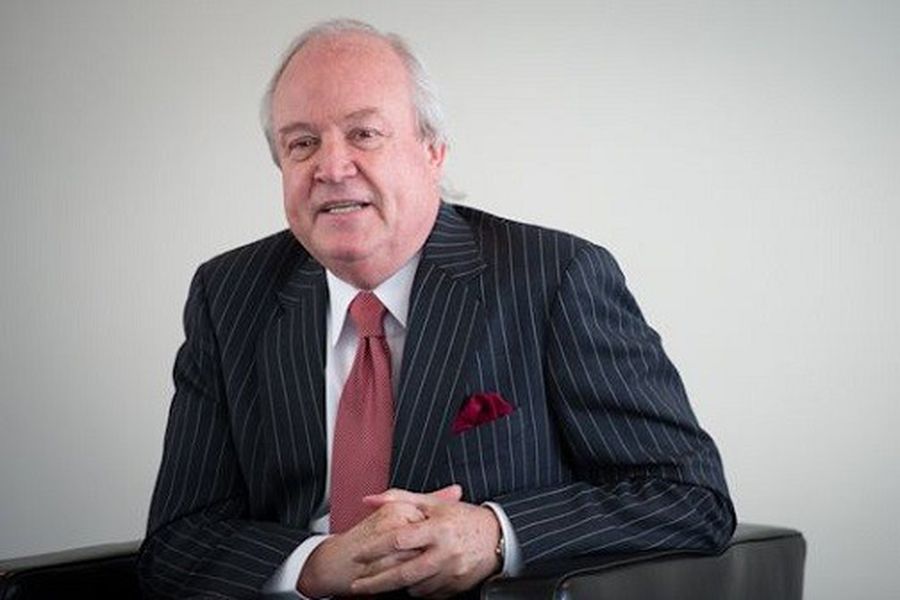
At a recent event hosted by the London School of Economics (LSE), Jorge Heine, former Research Professor at the Pardee School of Global Studies, presented the central arguments behind his book The Non-Aligned World: Striking Out in an Era of Great Power Competition, co-authored with Carlos Fortin and Carlos Ominami.
The discussion examined the resurgence of non-alignment in the twenty-first century through the concept of Active Non-Alignment (ANA), a framework that Heine has championed and has gained increasing relevance as countries navigate growing unease within a rapidly changing international system. At the center of such tensions, Heine argues, “is the competition between the United States and China for primacy.”
Throughout the talk, Heine emphasized that the emerging rivalry does not necessarily force countries into choosing sides. Instead, he argued that today’s geopolitical landscape offers more options for states seeking to maximize their interests and preserve strategic autonomy. “When you move from a monopoly … to a duopoly, which is what you have today, this means you have a choice,” he said.
Drawing on examples from Peru, Ecuador, Brazil, and Chile, Heine showed how governments are pursuing economic and diplomatic opportunities with multiple partners while avoiding rigid alignment. As he explained, “The grand strategy is what we call playing the field,” an approach that allows countries to engage pragmatically with competing powers while retaining flexibility.
 A key theme of the discussion was the growing confidence and influence of the Global South. Heine noted that institutions such as the Asian Infrastructure Investment Bank and the New Development Bank reflect an increasing capacity for collective action beyond traditional Western-led structures. He argued that Active Non-Alignment has spread well beyond its Latin American origins because it speaks to a broader desire for autonomy in an era of uncertainty.
In one of the evening’s most memorable remarks, Heine captured the essence of ANA:
“It is a pragmatic approach to deal with an uncertain world. It provides a compass, a guide to action.”
Rather than presenting the concept as neutrality or a fixed ideological position, he described it as a practical foreign policy framework that can be adopted by countries of different sizes and political orientations.
Looking ahead, Heine suggested that the appeal of Active Non-Alignment is likely to grow as the Global South continues to seek a stronger voice in international affairs. He argued that states should have the freedom to chart their own paths and make decisions based on their own interests rather than external pressures. As he put it,
“Countries should be able to determine their own course, their own fate, their own future in terms of the direction they want to give to their foreign policy.”
Reflecting on the broader significance of the idea, Heine recalled the skepticism that initially greeted ANA and expressed confidence in its future impact, saying,
“I’ve always thought that there’s nothing more powerful than an idea whose time has come.”
The full book talk can be watched here.
A former research professor at the Frederick S. Pardee School of Global Studies, Jorge Heine is a diplomat, international relations scholar, and lawyer. He is currently a non-resident fellow at the Quincy Institute. He has served as an ambassador of Chile to China, India, and South Africa. Heine has written over fifteen books, including The Non-Aligned World: Striking Out in an Era of Great Power Competition (2025), which provides insights on how the Global South can navigate the changing diplomatic landscape amid the U.S.-China rivalry, and Traversing the Belt and Road: The World According to China and China According to the World (2026).