Heine Discusses Outcomes of Trump-Xi Summit
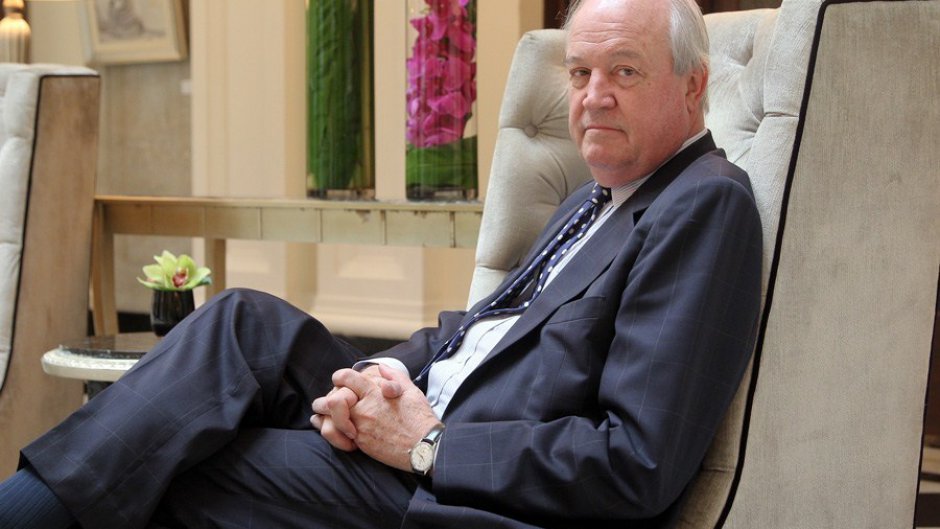
Jorge Heine, former Research Professor at the Pardee School of Global Studies, recently joined CGTN America to discuss the latest summit between Chinese President Xi Jinping and United States’ President Donald Trump.
A former Chilean ambassador to China and co-author of Traversing the Belt and Road: The World According to China and China According to the World, Heine highlighted several concrete outcomes from the meeting, including the extension of the U.S.-China trade truce, cooperation on fentanyl-related issues, renewed military-to-military exchanges, and the establishment of dialogue on artificial intelligence.
While he noted that “solved is a big word,” Heine argued that these developments represent meaningful progress in stabilizing one of the world’s most consequential bilateral relationships. He noted that the extension of the trade truce from November into January is a sign of warming relations between the two governments.
“The fact that President Trump and President Xi are meeting so often,” Heine said, “is in itself extremely important. It means that these two superpowers are lowering tensions, are looking at a number of issues from a shared perspective.”
While concerns about unregulated AI development continue to grow, he welcomed efforts by Washington and Beijing to establish channels for communication and cooperation, expressing hope that the two countries will build lasting institutions to address emerging risks and enhance global stability.
The full interview can be watched here.
A former research professor at the Frederick S. Pardee School of Global Studies, Jorge Heine is a diplomat, international relations scholar, and lawyer. He is currently a non-resident fellow at the Quincy Institute. He has served as an ambassador of Chile to China, India, and South Africa. Heine has written over fifteen books, including The Non-Aligned World: Striking Out in an Era of Great Power Competition (2025), which provides insights on how the Global South can navigate the changing diplomatic landscape amid the U.S.-China rivalry.