Najam Speaks of Indus Water Treaty and Future of Hydro-Diplomacy
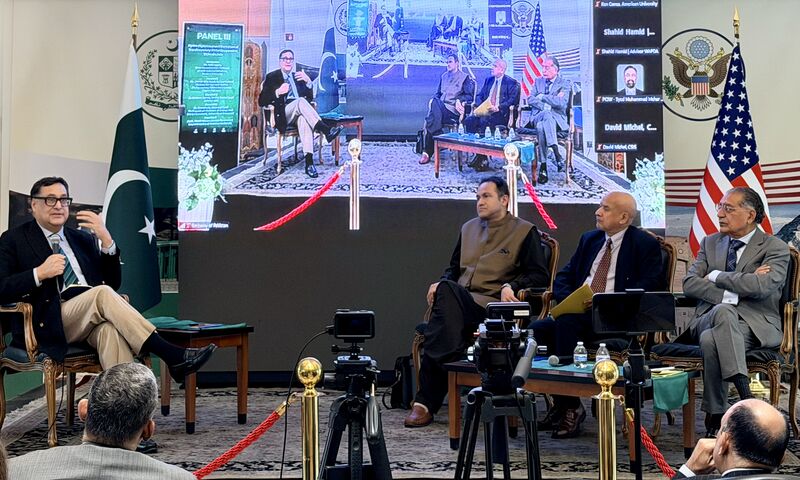 In late August, Professor Adil Najam, Dean Emeritus and Professor of International Relations at the Pardee School, spoke at a seminar on the Indus Water Treaty (IWT) and Security in South Asia held at the Pakistan Embassy in Washington, D.C., where he reminded the audience that although the present is defined by threats and stress under the clouds of bellicose narratives, the past suggests that IWT has been possibly the only example of sustained – even when strained – cooperation between India and Pakistan. He argued that “this alone is reason to try to preserve and nurture river cooperation into the future.”
Building on his own past research, he pointed out that transboundary water is amongst the most ancient and persistent areas of conflict in international relations. “Yet, the overwhelming norm has been cooperation, not conflict,” he said. Najam pointed out that “this is not because water is an easy issue, it is precisely because it is not. Sane minds have always come to realize that water is way too important to be jingoistic about.”
He reminded the audience that “if you follow the logic of retaliation and repercussion and you soon realize that playing with water can be more dangerous than playing with fire. It is that sane realization that gave use the IWT in the first place.”
He hoped that despite the current climate of distrust in South Asia, India and Pakistan, they will seek the path of cooperation rather than conflict on this vital issue.
Adil Najam is Dean Emeritus and Professor at the Pardee School of Global Studies at Boston University. He served as the Inaugural Dean of the Frederick S. Pardee School of Global Studies from 2014-2022. He is also a former Vice-Chancellor of the Lahore University of Management Sciences (LUMS). Read more about Najam on his Pardee School faculty profile.