Heine Discusses Latin America’s Place in an Era of U.S.-China Competition
As strategic, global competition between the United States and China increasingly reshapes global politics, Jorge Heine, former Research Professor at the Pardee School of Global Studies and Chilean ambassador to China, is urging Latin American countries to pursue a more independent course. In a recent interview with The China-Global South Project (CGSP), Heine examined how geopolitical tensions are playing out across the Western hemisphere, where governments face growing pressure to align with Washington while China continues to expand its role as the region’s leading trade and investment partner.
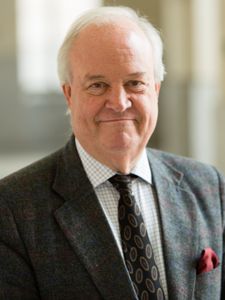
According to Heine, China has become impossible for Latin American policymakers to ignore in what he describes as the emerging “Asian century.” Drawing on recent public opinion data, Heine noted that perceptions of China have shifted dramatically in parts of the region. He said,
“China now has left the United States behind in terms of its standing in Chilean public opinion, which a few years ago would have been unthinkable.”
Heine that many governments increasingly view China as a source of investment, trade, and economic opportunity, while U.S. policy has become associated with tariffs, sanctions, and protectionist measures. Despite efforts by Washington to discourage Chinese involvement in sectors such as technology and infrastructure, Heine contends that economic realities continue to pull Latin American countries toward deeper engagement with Asia.
At the center of Heine’s analysis is the concept of active non-alignment, a foreign policy approach he has championed in recent years and been central to his latest publication, The Non-Aligned World (2025). Rather than choosing sides between competing great powers, he argues that countries should evaluate each issue on its merits and maintain the flexibility to work with multiple partners.
“Once you subordinate yourself to one of the great powers, well, from that moment on, what you do is to follow instructions,” Heine explained. “If you keep your independence, it puts you in a very different position, and that’s the thing about active non-alignment.”
 Looking ahead, Heine argues that Latin America is uniquely positioned to benefit from a changing global economy. With abundant reserves of copper, lithium, agricultural resources, and renewable energy potential, the region has significant leverage in emerging green and digital industries. The challenge, he says, is moving beyond exporting raw materials and toward developing higher-value production and regional cooperation.
For Heine, active non-alignment offers a pathway for Latin American countries to strengthen their economic autonomy while maintaining productive relationships with both the United States and China in an increasingly multipolar world.
The full interview can be watched here.
A former research professor at the Frederick S. Pardee School of Global Studies, Jorge Heine is a diplomat, international relations scholar, and lawyer. He is currently a non-resident fellow at the Quincy Institute. He has served as an ambassador of Chile to China, India, and South Africa. Heine has written over fifteen books, including The Non-Aligned World: Striking Out in an Era of Great Power Competition (2025), which provides insights on how the Global South can navigate the changing diplomatic landscape amid the U.S.-China rivalry.