News & Media
Newsletter
Stay connected with the latest breakthroughs in biological design with The Biodesign Bulletin. This recurring digest highlights new research, major publications, center updates, and upcoming opportunities.

Current Edition
The Biodesign Bulletin – Feb. 05, 2026
Previous Edition

Rethinking Antibiotic Resistance Through Engineered Biology
Inside the Dunlop Lab at BU’s Biological Design Center At Boston University’s Biological Design Center, researchers are rethinking how engineering biology can illuminate—and ultimately help solve—some of today’s most pressing challenges. Among them is Biomedical Engineering Professor Mary Dunlop , whose work is uncovering the subtle but powerful differences in how... More

Another Year of Gold for BU iGEM
The team, going by the name FloraSynse, developed FloraDX, an at-home diagnostic tool for monitoring bacterial vaginosis (BV), a condition that affects nearly one in three women. Unlike current diagnostics, which offer only a single snapshot of the vaginal microbiome, the BU team’s approach uses daily sampling and continuous monitoring... More
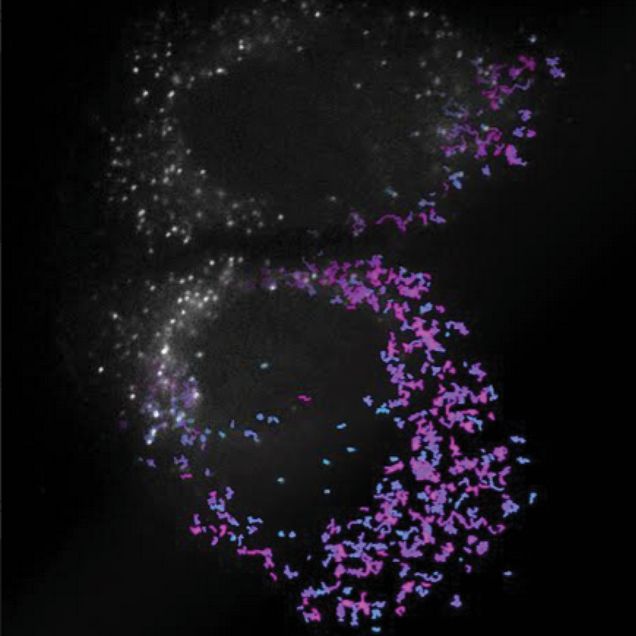
Pictures of RNA in Unprecedented Detail
Better mRNA medicines might result from Ngo team’s new cell imaging tool: Led by John T. Ngo, associate professor of biomedical engineering, the team has engineered coat proteins that bind to RNA when introduced into a cell sample. Upon binding, the proteins light up so as to be seen through a... More

Liangliang Hao Wins Innovation Award for Research into Lung Disease
Assistant Professor Liangliang Hao (BME) received the Innovation Award from the American Lung Association for her research project titled Developing Innovative Early Detection Test for idiopathic pulmonary fibrosis (IPF), a serious lung disease that is relatively understudied.

BU Engineer Builds Next-Gen Sensors with a Mix of Living Cells and Tiny Electronics
A BU College of Engineering assistant professor of biomedical engineering, Jimenez’s convergent research combines synthetic biology—which uses tools like genetic engineering to create new biological systems—and microelectronics to develop small devices with a range of applications. The underlying technology could one day be used to not just track environmental conditions, More

BU Biomedical Engineer Christopher Chen Elected to National Academy of Medicine
Boston University biomedical engineer Christopher Chen has been elected to the National Academy of Medicine. The nonprofit institution, founded to provide objective advice to the US government, says membership “signifies the pinnacle of professional achievement and commitment to volunteer service.”

Seven ENG Faculty Honored for Real-World Impact Research
The ENG faculty honored: Michael Albro (ME, MSE) and Mark Grinstaff, (BME, MSE) for Engineered Cartilage and Long-Term Tissue Repair Ayse Coskun, (ECE, SE), for Energy Efficient Data Centers Ji-Xin Cheng, (ECE) for A New Way to View Tiny Particles John Ngo, (BME) for Targeted mRNA Therapies Selim Ünlü, (ECE) for More Efficient, Higher Quality... More
Curing Heart Attacks, Replacing Diseased Organs—Christopher Chen Is Engineering a Healthier Future
Chen is the founding director of BU’s Biological Design Center, which aims to improve our understanding of how cells and biological systems work, and then find ways to control them for our benefit. That involves designing technologies that can improve human health and the environment: engineered blood vessels that help... More
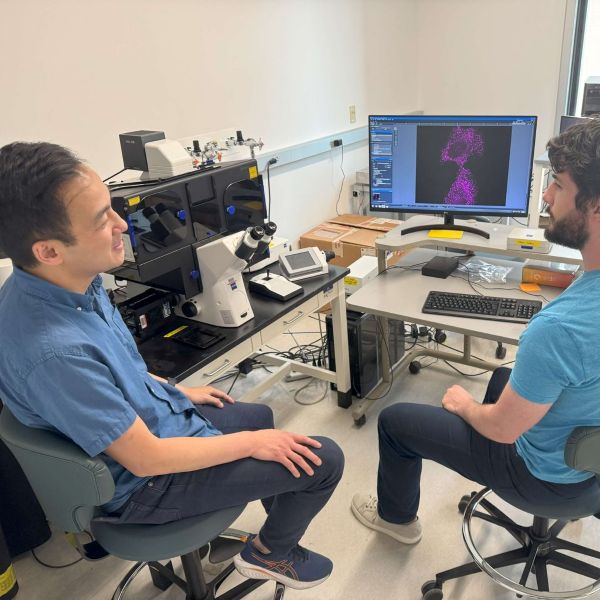
Developing tools to study and reprogram cells at the molecular level
The Ngo Lab, led by Professor John Ngo (Biological Design Center) aims to achieve a better, multi-scale understanding of the molecular organization of life—and to help other scientists do the same—by developing tools to measure, probe, and even re-program how cells communicate with one another... More

Spotting Signs of Cancer When There’s Still Time. Hao named a Beckman Young Investigator
What if clinicians had the technology to detect this activity? What if they could regularly scan high-risk populations, tracking the earliest disease signatures in real time and space? That sort of early warning system could save lives. “If we could spot disease sooner, diagnose it with greater precision, we’d open... More