PDF
|
an interview by Liza Katz with
Ben Mazer
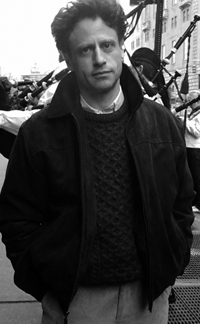
Ben Mazer (photo by Vanessa Barnard)
|
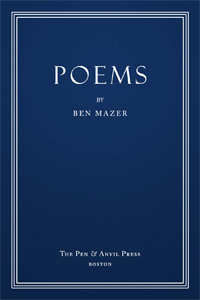
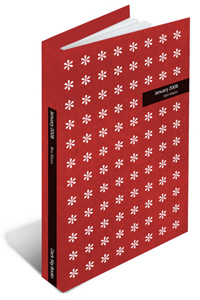
Ben Mazer is a graduate of the Editorial Institute here at Boston University, where his advisors were Sir Christopher Ricks and Archie Burnett. His most recent collections of poems are Poems (The Pen & Anvil Press) and January 2008 (Dark Sky Books), both published in April 2010.
Pulitzer Prize-winning poet John Ashbery has said of Mazer’s work: “Like fragments of old photographs happened on in a drawer, [his] poems tap enigmatic bits of the past that suddenly come to life again. To read him is to follow him along a dreamlike corridor where everything is beautiful and nothing is as it seems.”
Q: You’ve published several collections of your own poetry; you’ve also edited volumes by such poets as Landis Everson and John Crowe Ransom. What challenges have you found in balancing your work as a writer with your editorial work, and what insights have you gained as a result?
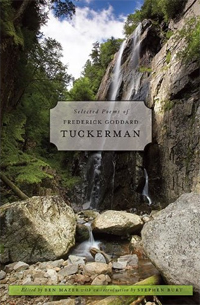
Yes, I’ve edited the poetry of Landis Everson, John Crowe Ransom, and now Frederick Goddard Tuckerman (Selected Poems of Frederick Goddard Tuckerman, Harvard University Press, 2010), as well as several feature-length anthologies for Fulcrum, all while working continuously on my own poetry. I can only say that this kind of work refines and bolsters one’s sense of the delicacies of the literary medium. One gravitates more confidently toward precision in one’s thought and expression. It’s far from stultifying to become intimate with the working textual or revisionary processes of a gifted poet through a careful and studious collation of manuscript and print sources.
|
Q: Your early poems are marked by a lyrical sense of rhythm, slant rhymes, and vivid landscapes. Do you feel your poetic style has changed over the years, and in what ways?
It’s just become more supple and given to incorporating wider ranges and stretches of feeling and observation. All the musical elements that were there to begin with are still at play, though perhaps the music has become richer, the contrapuntals, elided and chopped up puns and internal rhymes more devious. It is a quite unconscious thing. I am usually not intending either rhyme or meter or reference; they come very naturally.
Q: What drew you to the work of the Berkeley poets and Landis Everson in particular? When you wrote on the Berkeley Renaissance for Fulcrum, did you foresee taking on the task of editing Everything Preserved?
I fell in with Landis accidentally due to some impinging curiosity about the nature of poetry in the San Francisco bay area prior to the arrival of the Beats. While editing the Berkeley anthology—a map of what my curiosity led me to—Landis began writing poems again after a silence of 43 years. From that moment I saw Everything Preserved lying ahead in the future in a flash. The progression toward it seemed inevitable. There is a whole nother book too that Landis wrote after that—Book of Valentines—which hasn’t found a publisher yet. I think it’s his masterpiece.
|
Q: What interests you about the personalities you deal with in your poems, such as the criminal on the run in “A Traveller” and the jack-of-all-trades in “A Visitor?”
The poems I write generally spring from quite unconscious sources, so that I can’t very well say what the interest is (although I am personally attracted to the sounds and rhythms). A friend has suggested, in the case of those early poems, that the subject or protagonist actually represents some dimension of myself, possibly of my anxieties and a working out of their potential spiritual meaning. But the figure in “A Visitor” is also my uncle the architect and aesthetic philosopher—a man who lives almost invisibly among us and yet leaves his permanent mark of influence on our lives and surroundings after he is gone. In “A Traveller” I believe I was thinking of or experiencing the desire to escape from a worldly identity toward a truer, more personal and also more impersonal, spiritual identity, itself marked by the influence of past allegiances and conflict.
Q: What new projects do you have in the works?
I wish to do a great deal of reading in theology, philosophy and history, and to reread a lot of favorite poetry. I’ll bide my time until new poems occur. I suppose I’ll look for a job or for some attractive means of avoiding working for others altogether, but that partly depends on what I conclude from my reading, and whatever other unexpected opportunities lie in my future.
|
Q: Who do you feel are your greatest influences?
My entire life is the influence for my poetry; and something more than that, something that I would call innate within (which when applied to experience might, for example, recognize the eternal dimensions in concrete and particular microcosms of the universal story, a man with a white beard at the base of a mountain on a wood floor covered in sawdust, say, or see). Something which I wanted to find a means to express, and in which I expected to discover my relationship to the world. Additionally, in particular, there have been my friendships with such intelligences as Christopher Ricks, who was my advisor at the Editorial Institute, and the poets Philip Nikolayev and Stephen Sturgeon, who edit Fulcrum: An Annual of Poetry and Aesthetics, to which I have contributed poetry and prose. As a young poet I was especially influenced by Yeats, Auden, T.S. Eliot, Hart Crane, Robert Lowell, Wallace Stevens, Dylan Thomas, William Empson, R.P. Blackmur, Robert Graves, Blake, Shelley, Donne, and Shakespeare—the usual suspects.
I was also influenced by being surrounded by my grandparents during childhood, by an uncle who taught me something of classical music and art, and aesthetics, and by reading Lewis Carroll and Poe quite early on. My father was a psychoanalyst, and my mother was an actress on the stage; my entire extended family was extremely nurturing and kind. This is a cursory overview and doesn’t touch upon the thousands of silver and golden age motion pictures (many of them silents and early talkies) I have contemplated since the age of about six. In grasping the world, the image is very strong. It is the translation of imagery, and its ideational correlatives, into sound which is the particular problem or experience of the poet. Landis Everson was undoubtedly an influence in that he made anything seem possible. I think he was the best poet of his generation, though he didn’t fulfill his promise until the end of his life. Up until then, his inner resources were just brooding and brewing.
|
Q: As a new writer, what did you do to help establish yourself?
To establish myself in some small degree I enlisted the encouragement of elders such as Seamus Heaney and Robert Lowell’s friend William Alfred, and then built upon that as a means of obtaining the confidence of a courageous individual named Barbara Matteau who undertook to publish my first book of poems, White Cities (Cambridge, MA: Barbara Matteau Editions, 1995). This book included a cover and title-page illustration by Robert Lowell’s friend Frank Parker, of which I was enormously proud. Though Seamus was a pernicious influence in and out of his advanced poetry writing seminar at Harvard; I didn’t want to write like that, and felt like I had something better up my sleeve. The times seemed against me. Philip Nikolayev and I gave readings and attracted our own audience among the student population; they wrote passionate and billowy articles about us in the Advocate, calling us the Cambridge Wits. We were elected as honorary members to the Signet Society, but the house lady there was I think a bit horrified and we were never given a key to the outfit.
Q: Do you have any advice for new writers ?
My advice to those who feel they have a serious need to communicate something of importance in poetry is simply to read a great deal, very widely, and if possible thoroughly, in order to become intimate with the nature of the language and the range of what has already been done. Wide and thorough reading in different historical periods of literature, and at different levels, from the popular to the esoteric, has the capacity to illuminate the overall essential exigencies of the language situation as well as the human one. To those who have nothing really serious to say, give it up before you harm yourself with notions. It is a life of great spiritual and personal hardship, not very desirable except to the compulsively obsessive. You can ruin your life in this wild goose chase! But some people can’t be tempted away from it. We should pray for them, but it is their own folly.
<< Back to Issue 14, 2010 |